Working From Doubt

I have arrived! Now is a time in my life that I fought hard for, for many years. I should be beaming with pride for my achievement and relaxing with the fruit of my efforts.

So why am I plagued by incessant debilitating self-loathing?

Well, I guess you can’t have everything.


When I graduated high school, I knew what I wanted to be: I wanted to become a freelance ASL interpreter. I wanted an education. I wanted a home. I wanted a family. In the ensuing ten years, I have chipped away at that list, attending college, earning three degrees, marrying my college sweetheart, establishing a home for us, and becoming a mother. Three years ago, I earned my interpreting credential and starting working freelance on the side, while maintaining my nine-to-five job for its financial security. This year, after a great deal of consideration and planning, I decided I’m ready to take that final leap: I resigned from my nine-to-five and announced that I would be freelancing starting in 2016.

I’m excited, and terrified, and elated. I feel like Diane Lane’s character in Under the Tuscan Sun: after years of struggle, I finally got everything that I asked for. But in my head and in my heart, I’m still so deeply unhappy with myself. Ever since I made my decision, I’ve been completely depressed — why am I tortured this way?

In part, I am actually deeply disappointed with myself. I’ve managed to achieve a great deal, but I’ve feel that I have failed myself in other ways, primarily in terms of managing my self-destructive behaviors. Things that I once considered to be bad habits or the result of a poor lifestyle have now insinuated themselves into my psychological state: I’m not just an emotional eater, I’ve developed a full-blown eating disorder. I don’t just bite my fingernails when I’m anxious, I’m addicted to self-harm through dermatillomania. I don’t just have low self-esteem, I emotionally eviscerate myself with pathological regularity. I am literally incapable of experiencing my own joy. I’ve evolved in many positive ways, but the comorbidity of my progress to my illness can’t be overlooked. What if I sacrificed too much of myself in order to achieve my dreams?

Being A Girl: A Brief Personal History of Violence

Because women truly can do anything that men do — it’s just that sometimes we are killed for it.

Anne Thériault's avatarThe Belle Jar

1.

I am six. My babysitter’s son, who is five but a whole head taller than me, likes to show me his penis. He does it when his mother isn’t looking. One time when I tell him not to, he holds me down and puts penis on my arm. I bite his shoulder, hard. He starts crying, pulls up his pants and runs upstairs to tell his mother that I bit him. I’m too embarrassed to tell anyone about the penis part, so they all just think I bit him for no reason.

I get in trouble first at the babysitter’s house, then later at home.

The next time the babysitter’s son tries to show me his penis, I don’t fight back because I don’t want to get in trouble.

One day I tell the babysitter what her son does, she tells me that he’s just a little boy, he doesn’t know…

View original post 1,487 more words

10 Universal Truths (about wearing red lipstick)

There are some things that red-lipstick-wearers know to be true:

IMG_5303

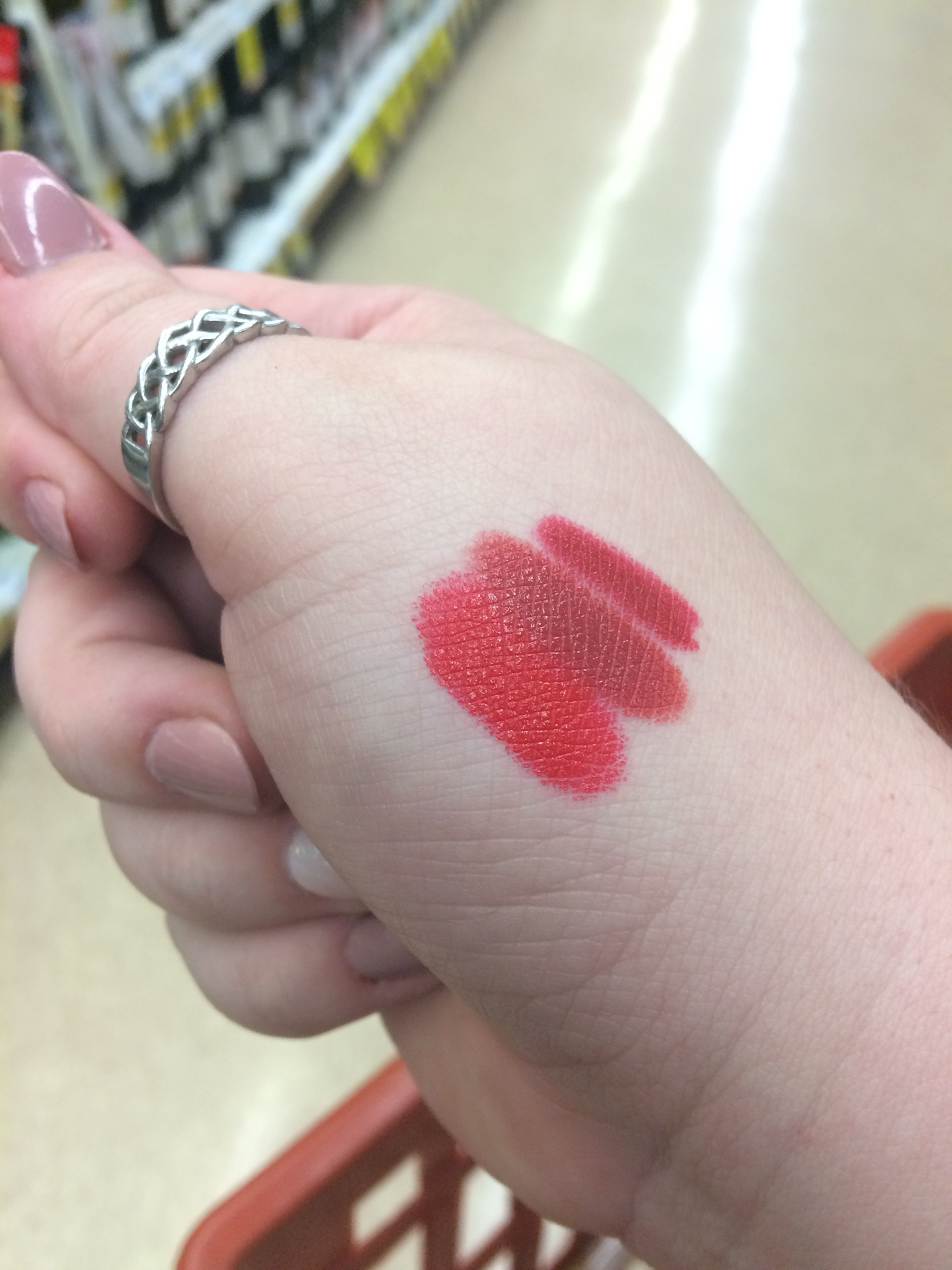
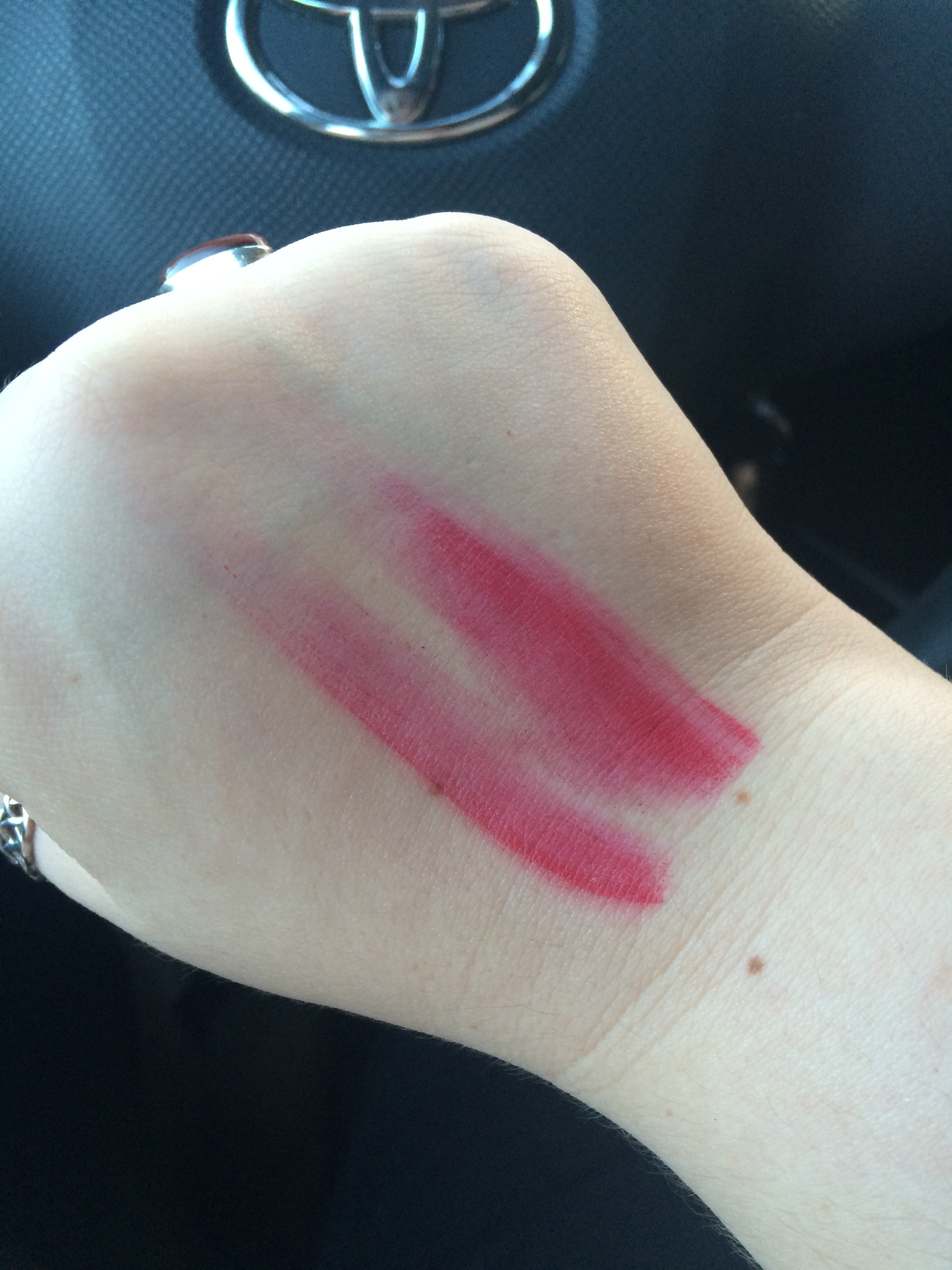
  1. The search for that perfect shade is a Grail Quest that will last a lifetime.
    And as soon as you find it, they’ll discontinue it. In the meantime, you just walk around the drug store like this:
    IMG_5186
  2. Technique. It’s a killer.
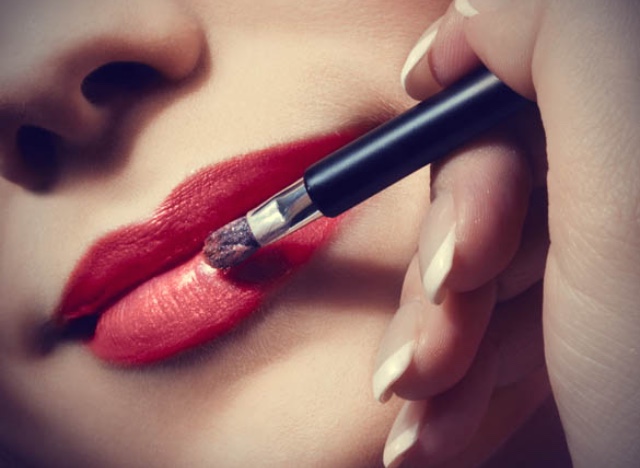
    IMG_5979 Ok, so first foundation, then powder, lip liner, stain, and finally lipstick? But not from the tube. Has to be applied with a brush. Wait, was the powder supposed to come before your first application, or after? And then blott? I don’t even know anymore.

  3. Perfection is the only acceptable paradigm.
    IMG_4340
    Nothing has the potential to look messier than red lip color.

  4. Whiten those pearly whites.
    IMG_5982
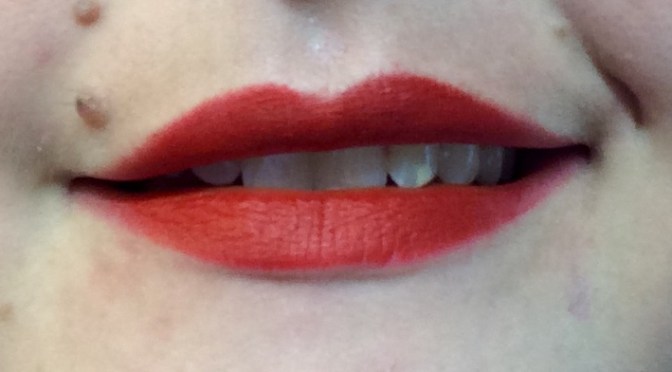
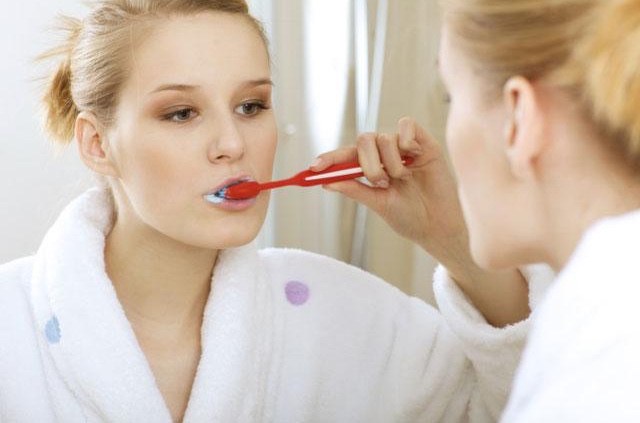
    Red lipstick does not make your teeth look whiter. Every minute stain left from coffee, tea, or your long-gone smoking habit will be heinously highlighted. You have been warned.

  5. Every water bottle you own is gonna look like this:
    IMG_5452No matter how many times goes through the dishwasher or soaks in the sink.

  6. Contouring.
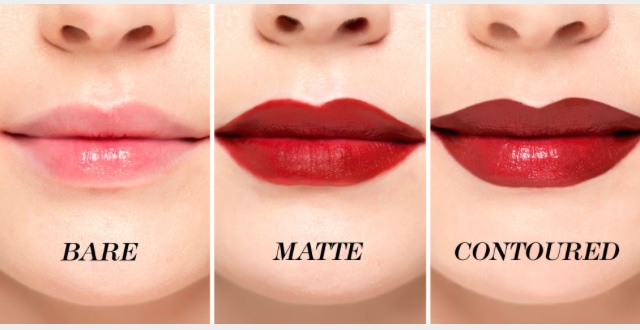
    IMG_5980What is this witchcraft?!

  7. One is never enough.
    sephora I have an entire make-up bag of red lipstick, lip liners, and stains. And I’m not sorry.

  8. Friends, family, and lovers BEWARE.
    IMG_1344
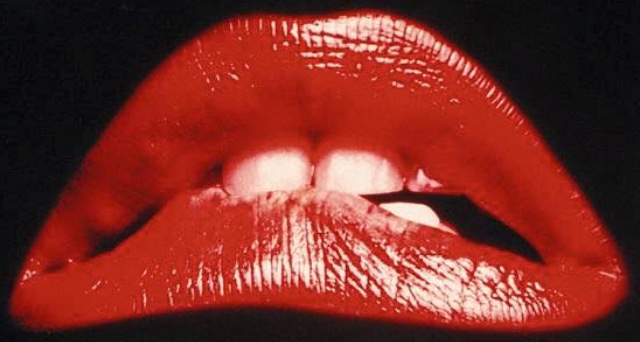
    My kiss is deadly! Uh, well, I mean, not deadly, but definitely long-lasting.
  9. And your average make-up remover? HA!
    IMG_4985Try a sand-blaster, my friend. That shit is never coming all the way off. Doubly true if you touch or wipe your mouth by accident. “Oh this? Yeah, I’m just not responsible enough to wear lipstick without getting it all over myself.”

  10. In the end, it’s all worth it to apply that liquid confidence and strut your stuff.
    Screen Shot 2015-11-12 at 9.41.15 AM No matter if your battle armor is applied out of a tube — you rock that mutha-f*cka.

    IMG_4516
    Ohhh yeeeah.

In memorial

Dear Scott,

10400744_544617694806_3045_n

You do not belong to me. Your loss has loss has touched everyone that knew you, and has devastated those who loved you best. We were friends, and we were close once, but your loss does not belong to me.

Still, I have been thinking of you, enumerating the things I wish I had done differently, and missing you.

I am so sorry. I could have been a better friend to you. I could have tried harder, called more often, showed you that I cared. I should not have allowed shame, misplaced loyalty, or time to drive a wedge between us.

I hope these words can somehow reach you across the void. I hope that you are at peace and no longer in pain. I hope that heaven is one long drift in a fast car, and that you live on with a smile on your face.

With love,
Sarah

476427_10100441638335226_1526350498_o 557170_10100292750951736_1065481763_n 1931269_539485859046_1395_n

Shoot First, Ask Questions Never: The Great Massacre Epidemic

I started writing this piece just one week ago, when the news broke all over social media that there had been another college campus shooting at Umpqua Community College in Oregon. I was heart-sick and overwhelmed, unable to articulate my feelings and ideas into coherence. I jotted down what I could, determined to come back to this piece later, when everything had calmed down some.

It did not.
It did not.

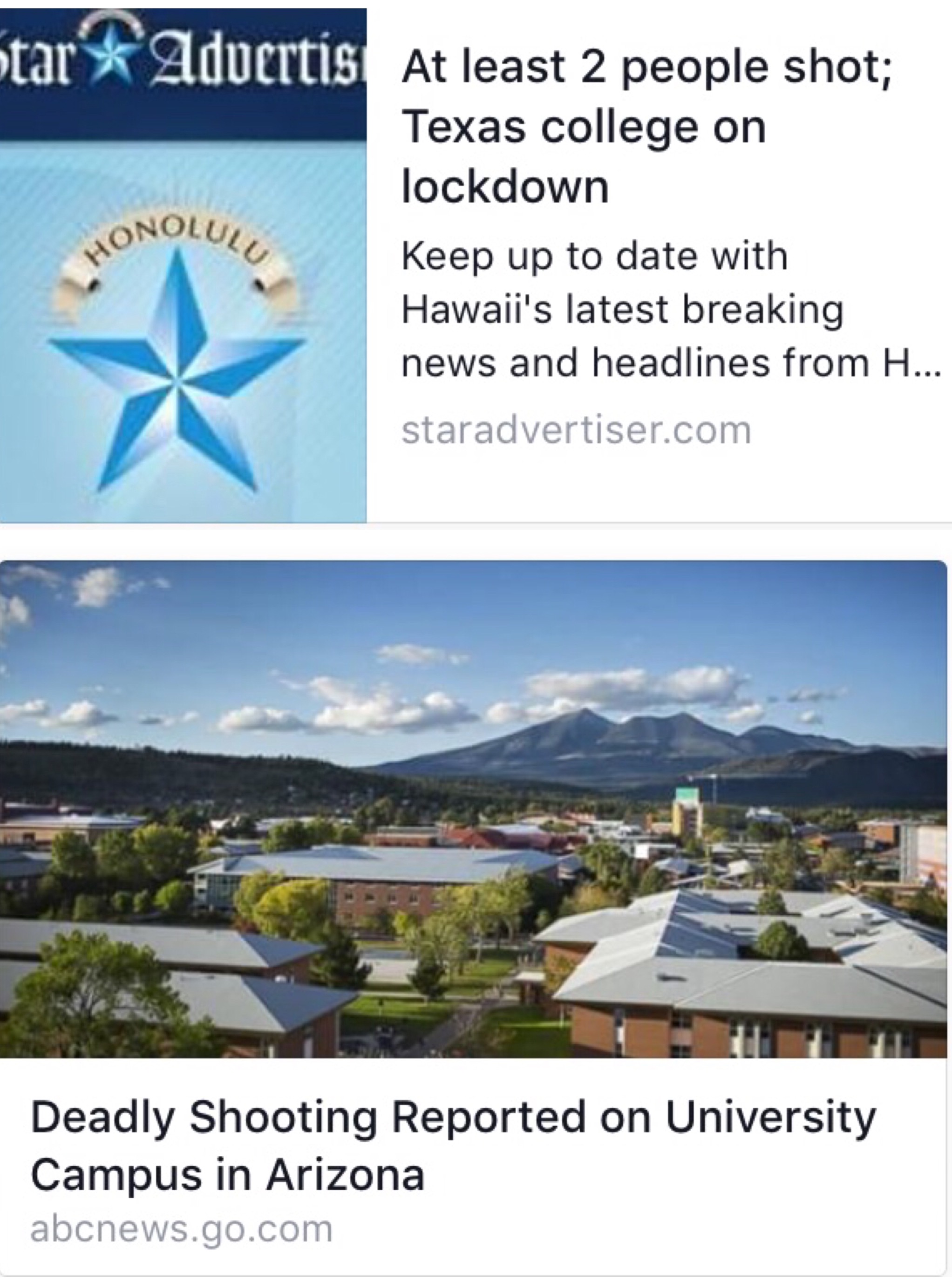
This morning I woke up to two news banners on my iPhone: One dead in campus shooting in Arizona. Developing: Texas University on lock-down after shots fired.

Again. It’s happened again.

I guess I’m just not like the numbed masses of American citizens who see these headlines and shrug: Oh, well, another one of those darn shootings. I care. I care about the people who have been robbed of their lives, I care about their families and friends who will now have to suffer unmentionable grief, and I care about the precedent that our society is establishing for future generations.

Future generations like my daughter.

My daughter is going to grow up in a world where one mass shooting can or will occur every week, and our politicians will say things like, “Crises happen.” She’s going to grow up to believe that this is how people are — cruel, jaded, and dangerous. I’m going to kiss her every morning and send her off to school, knowing that there is a possibility, however slim, that I will never see her again.

Some might say, “Well, that could be true in any case. Even in a perfect world, accidents happen.”

BUT THESE MASSACRES ARE NOT ACCIDENTS.

These are not accidents. And if we allow this to continue, then we are all responsible.


We need to start having the uncomfortable conversations that we have been avoiding en masse:

This epidemic — and that is the word we need to start using, because this is absolutely a national health crisis — isn’t just about mental illness. It isn’t just about lackadaisical weapons laws. It isn’t just about a society that has become numb to violence. It really isn’t about any of the things that mass media has been telling you it’s about.

It is high time we as a society come to grips with the fact that it is anger that causes violence, not mental illness, not guns, not exposure to video games and gratuitous violence. Other scapegoats need not apply. Let’s just look at some facts:

This profile is familiar because we’ve seen it before. The two killers of 13 people at Columbine High School in 1999? Eighteen and 17-years-old. Male. The murderer of 20 children and six adults in Sandy Hook Elementary School in 2012? Twenty years-old. Male. The shooter who killed six people in near the University of California, Santa Barbara campus in 2014? Twenty-two years old. Male. The perpetrators of the Charleston, South Carolina church shooting in June 2015, the Aurora, Colorado shooting in 2012 and the Tuscon, Arizona shooting in 2011? All men under the age of 30. The list goes on.

The perpetrators of these crimes are not disenfranchised minorities like the population of American sufferers of mental illness. These shooters are in fact at the highest run of the social privilege ladder — white, cisgender males in the prime of their youth. Perhaps they do suffer from a mental illness, but so do tens of thousands of other Americans, people who are more likely to kill themselves than ever harm another human being. So what exactly causes a a group of men to completely rupture and evacuate their humanity? As mentioned by Cliff Leek in the above quoted article: these individuals, who were born into a society that granted them untold privilege based on their race and gender, are rapidly being taken down a peg by an increasing shift to a more egalitarian society. Simply put, these men seem to have just lost it once having to confront demands that they check their own privilege. Is it so surprising that after raising generation after generation of boys to believe that their manhood is tenuous and revocable based on how much or how little they assert themselves, that some young men have started to crack under that strain?

It’s time that we stopped pretending that toxic masculinity isn’t a thing, and start doing better by our men and our boys. They deserve better. We all do.

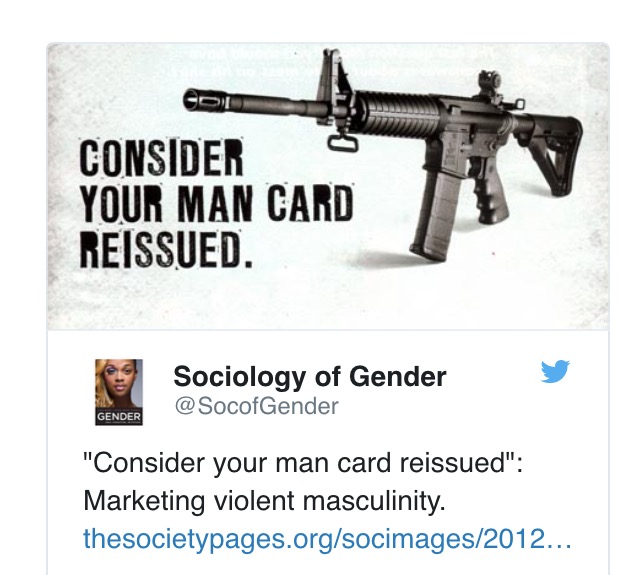
Toxic masculinity. It sounds like such a made-up buzz word. But it really is a thing, and a driving force behind this epidemic that we are all struggling to understand. We teach our boys, either directly or indirectly, that they have the right to power and status, and that power and status basically boils down to how many women they fuck, how much stuff they have, and how much ass they can kick. Then we teach them that if they don’t prescribe to this particular formula for success, they are wimps, pussies, or nancy-boys. Not only is our definition of masculinity so narrow as to exclude all but the most lumber-jacking of fellows, but it also excludes any conceits to compassion, emotion, or altruism. We’re raising our boys to be fucking sociopaths and whipping them when they break. If I were a dude, I’d be pissed as hell.

These shooters were pissed as hell. But for all the wrong reasons and at all the wrong people.

They were broken people, and we broke them. Not because girls refused to date them, or because they didn’t get the respect they deserved, but because we set them up to fail by teaching them that they had a right to take what they wanted with no recompense. We taught them that they must lash out, or else be forever condemned to sadness and isolation. Perhaps we have no right to be surprised, then, that these men sought to take their power back by force. That is precisely what we told them they must do.

image

Not acceptable.

Cruel Intentions

So I’ve been seeing this quote from Louis C.K. floating around on my social media streams a lot recently:

LouisCKIt reads, “When a person tells you that you hurt them, you don’t get to decide that you didn’t.”

When I read this the first time, I thought, “Hell yeah!” because I, like most of the people who are sharing this meme, have been hurt by people who have then denied responsibility for hurting my feelings or completely negated the fact that I had any valid reason to be hurt in the first place. I think that’s why so many people are identifying with this statement — we all just want to feel validated. To have the person or persons responsible for our hurt to apologize to us, or if not apologize, simply own the fact that they perpetrated some action that caused us pain, whether intentional or unintentional, is a fairly universal desire. We all just want to feel that we have been heard.

I believe that Louis C.K., a comedian and writer whom I respect very much, penned these words to illustrate that simple fact: sometimes, whether or not we mean to, we hurt people, and when that happens, the decent thing to do is show respect for and acknowledge their feelings, particularly in light of how vulnerable one becomes when admitting their emotional experience. Perhaps you could even apologize, if you’re able. Again, as a person who has been hurt by another’s careless or ignorant actions, I can vouch for the emotional validity of Louis’ statement.

That being said, the more I have seen this phrase being tossed around — screen-capped on Whisper, added to a image of foggy trees in the background, written in flowery text — the more degraded the original message seems to have become. I’ve seen these words captioned, “Hell yes!” and “You know who!”, as if the poster were making an accusation or a demand — “You hurt me, so you owe me an apology! And whatever else I choose to take from you in recompense for having hurt my feelings!”

Whoa… slow your roll, there. You mean to tell me that just because your feelings got hurt, you’re entitled to an apology? No, no, no. Victimization and malicious intent notwithstanding, I don’t think that’s how this works.

You see, the way I learned it is that if you’ve done something wrong, you apologize. I was always very comfortable with that simple rule, which much like the Golden Rule (treat others the way you wish to be treated), doesn’t lend itself to much interpretation. However, now we’ve added an element of entitlement to the clause, implying that a.) if you have been hurt, you are indisputably in the right, despite whatever situation preceded your being “wronged”, and b.) if you are hurt, you are unequivocally entitled to an apology, regardless of the other person’s intentions or lack thereof.

This is a very slippery slope for a person like me.

First of all, I am SORRY. I’m sorry all the time. I’m sorry for burdening you, for being a nuisance, for drawing attention onto myself. I’m sorry that I’m making waves, making you uncomfortable, making you think. I’m sorry that I exist and that my mere existence has even the slightest chance of harming you one day. My id will entice me to apologize for literally anything, even things that I didn’t do or couldn’t help, unless my ego steps in to draw the line. And it must. It really must, because otherwise I will turn into a quivering ball of jelly, so desperate to please every one that I dither away into nothing.

Secondly, being the people-pleasing, conflict-avoiding, self-doubting gal that I am, I have been known to apologize for things I didn’t really feel sorry for, just as a way to smooth things over or avoid a conflict. This includes those things that I either didn’t have a hand in, or couldn’t help to begin with. I’m an apology-monger; I’ll just hand those babies out anywhere if it seems at all appropriate or desired. This is not unique to me: women are stereotypically guilty of applying the “gratuitous” or “assertive” apology, due to our collectively warped sense of politeness which requires that we preface our requests or opinions with “I’m sorry, but…”, which is supposed to make whatever comes after the “but” sound nicer, but really just forces us to undermine ourselves from the get-go. “Uh, if you’re sorry about it, then why are you even bringing it up?” Excellent question!

Knowing that I am an apology-monger, I’ve tried to become very judicious about how I use the words “I’m sorry” or “I apologize”. Like, I’m only going to say it if I really mean it. To that end, some people have gotten mighty pissed with me when, due to my own carelessness or perhaps even a simple difference of opinion, I didn’t apologize either for my actions nor for how they felt. My reasoning was thus: “I didn’t mean to hurt you, offend you, or make you angry. I recognize and respect that my actions (or lack thereof) came off the wrong way, and that despite my good intentions, you were hurt. That is undoubtedly unfortunate, and I regret that it happened.” Period. End the incessant babbling that may lead me to utter an insincere apology. Even as I write this, the entirety of my being wants so badly to append that statement with “I’m sorry” — but what am I sorry for? If it was an honest mistake that caused the other person to be hurt, if there were no cruel intentions, what am I really apologizing for? That someone’s feelings were hurt?

As far as I’m concerned, the meaning of “I’m sorry” or of any apology is to admit and accept responsibility for some wrong-doing. This is where my issue with the above meme comes into play: I don’t think that, just because someone’s feelings were hurt, that the person who ostensibly did the hurting is truly responsible for that. Responsibility implies that someone actually did or was supposed to do something; to take some action. But it seems to me that when people are identifying with and extemporizing this meme, they are actually angry at someone for either unknowingly making a mistake, or simply failing to act in a way that they (the hurt-person) wanted or expected.


If I have done something shitty, then of course, I ought to apologize. Hopefully, this isn’t a point of contention or confusion for people. Generally, I think that if you’ve done something shitty, you know it. And if you know you’ve done something wrong, you ought to feel compelled to apologize. This is probably Utopian wishful thinking, to rely on a person’s innate understanding of morality and the honor system to dictate when and where sincere apologies should be doled out. I can already hear my detractors unleashing streams of misanthropic vitriol about how sociopaths and perhaps even your average person has no innate morality at all. But I’m an optimist (most days), so I’ll give people the benefit of the doubt: If you know you’re wrong, you should also know you need to apologize. If, however, you are merely regretful to have inadvertently caused someone pain, I’m not entirely sure an apology is warranted — and to offer one in that instance would be disingenuous.

I recognize that the shoe has often been on the other foot: I have, through carelessness or ignorance, hurt the people that I love. In that case, I am compelled to apologize, and I will do so in order to make amends. That is how I want to be treated. However, reading that quote from Louis C.K. made me uneasy, not only because (when taken out of context) it implies the entitlement to an apology, but also because it places the burden of responsibility entirely on the perpetrator, regardless of what actions or intentions predicated the hurt. And what if, as has often been my experience, the perpetrator was simply trying to do right by themselves?

Suppose a woman leaves an abusive marriage, and in the course of saving her own life, her mother-in-law asks her How could you do this to our family? I am so hurt by your actions. Should that woman apologize for her actions, for saving her own life? Is she actually responsible for her mother-in-laws feelings?

This is where I absolutely have to draw the line. If you accidentally cause someone emotional pain in the course of doing right by yourself, you are not responsible for that person’s hurt or for their feelings of disappointment. You are not more beholden to the feelings of another than you are to yourself.

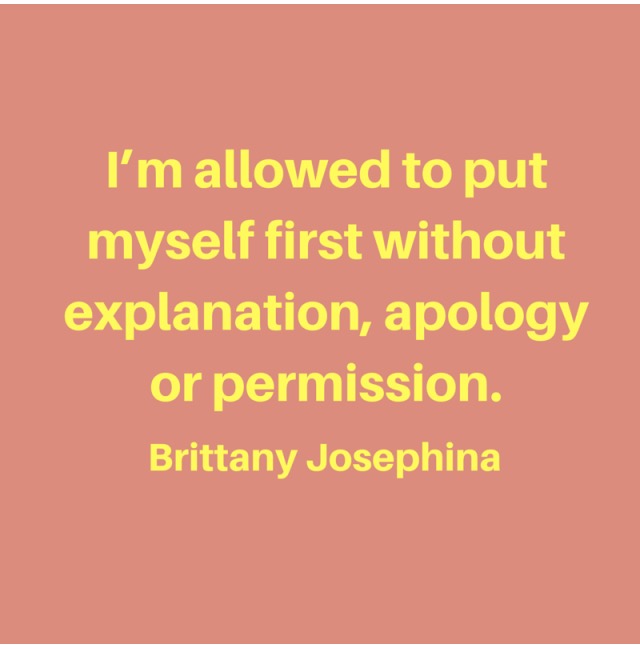
FullSizeRenderYou are allowed to put yourself first. You are allowed to continue to develop your inner being, even if your development begins to contradict who you used to be. You are entitled to love yourself first and foremost. Being impeccable with your word, holding yourself to realistic standards, and assuming good intentions is part of the agreement that you make with yourself to be the best possible person you can be.

If we have been inconsiderate, that’s one thing. If we have merely made a mistake, that is quite another. Before we start beating eachother’s doors down for apologies and retributions that we think we’re owed, let’s stop to consider our expectations and which associated intentions precipitated our ire. After all, isn’t that how you would wish to be treated?

You Don’t Look Sick and Other Microaggressions

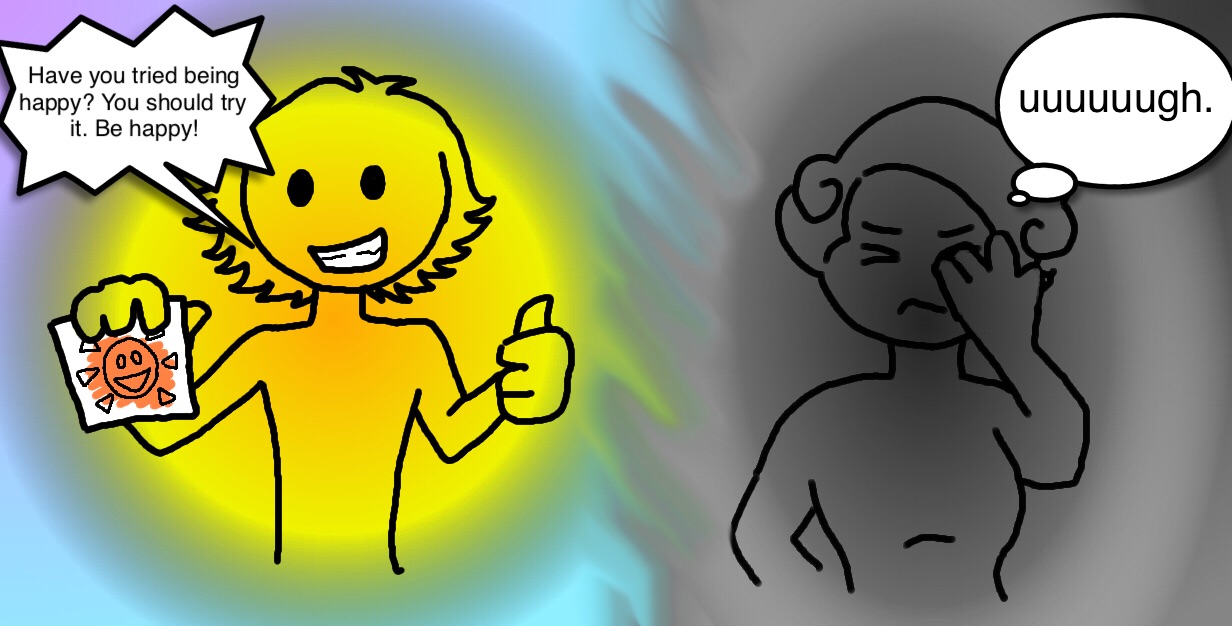
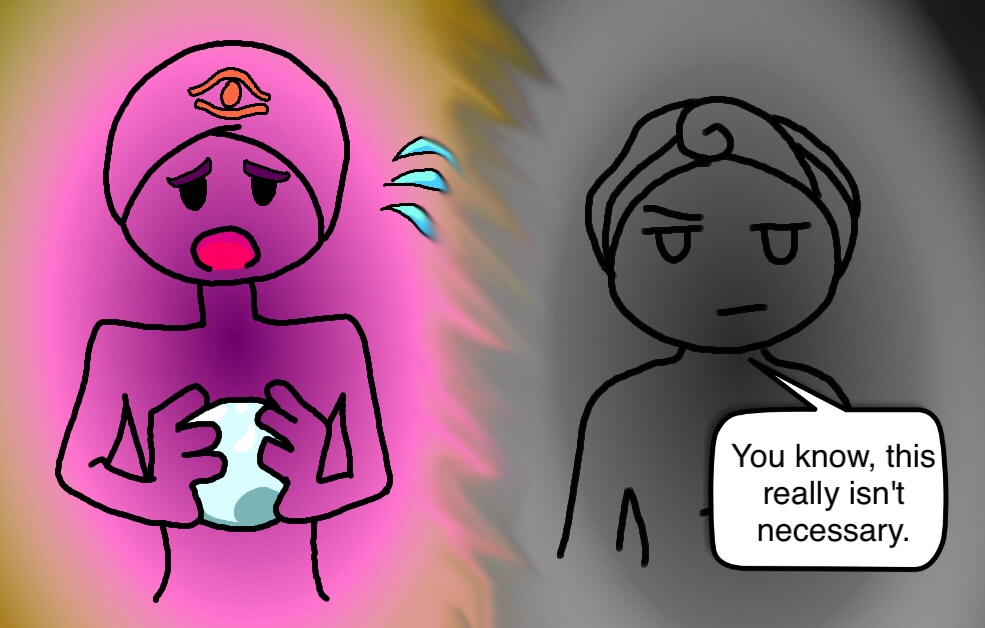
Having a mental illness means fighting a war on all fronts. I wake up in the morning to fight the same hellacious demons that prevented me from sleeping the night before. And while those dogs follow along snapping at my heels, I navigate a world that is filthy with social landmines: impossible-to-detect people and situations that will inevitably blow up in my face. Some of the worst of these hidden bombshells are the well-meaning, ignorant, or otherwise unaware kind. Harvard psychologist Chester M. Pierce initially coined the term “microaggressions” to connote the insults and dismissals that non-black-Americans hurl at people of color. Later, the term came to apply to all statements of ignorance made by the majority about a minority. For those of us living with a mental illness, these statements belie an underlying dismissal by those who are neurotypical on the bases of invalidation, assumption of inferiority, fear of mental illness, shaming of mental illness, and second-class citizenry.

With the help of illustrator, Ms. Alex, I am pleased to present you with a few of my favorites. (Read: things I’m really fucking tired of hearing.) I would love to see yours in the comments!


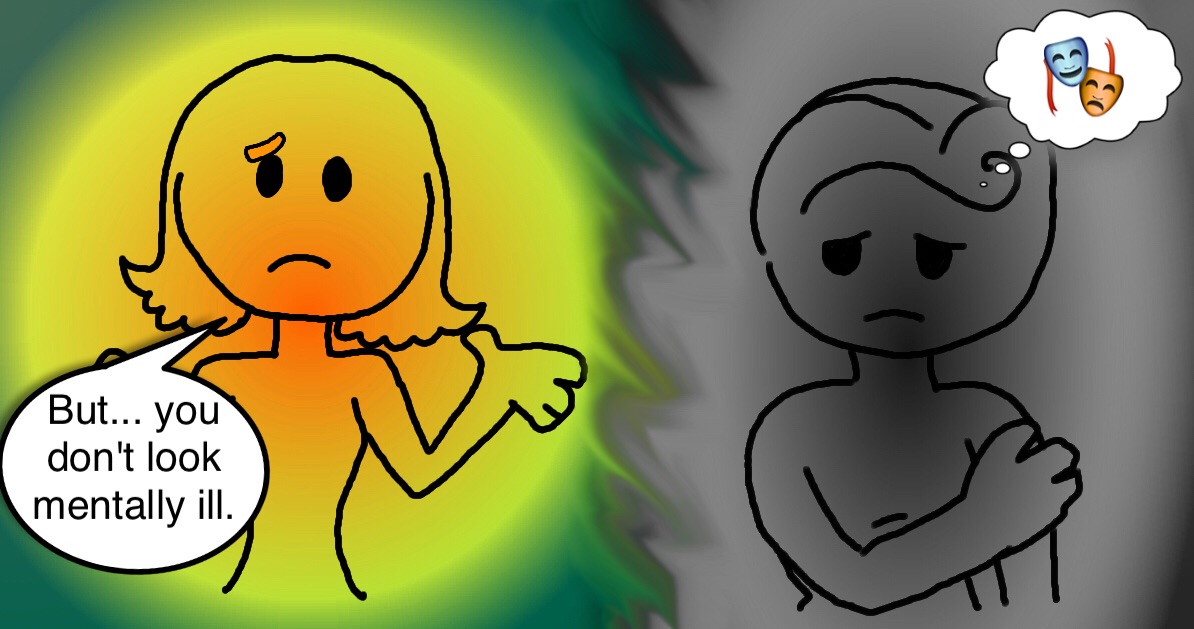
“But you don’t look sick.”

imageAnd you don’t look like a doctor. When I hear this from people, I often want to ask them what “sick” looks like. Should I be a homeless bag-lady? Would that my my illness more legitimate? I wonder if this means I need to prove my illness to you. Like, “Here is a list of my symptoms. Is that sufficient evidence to back my story?”

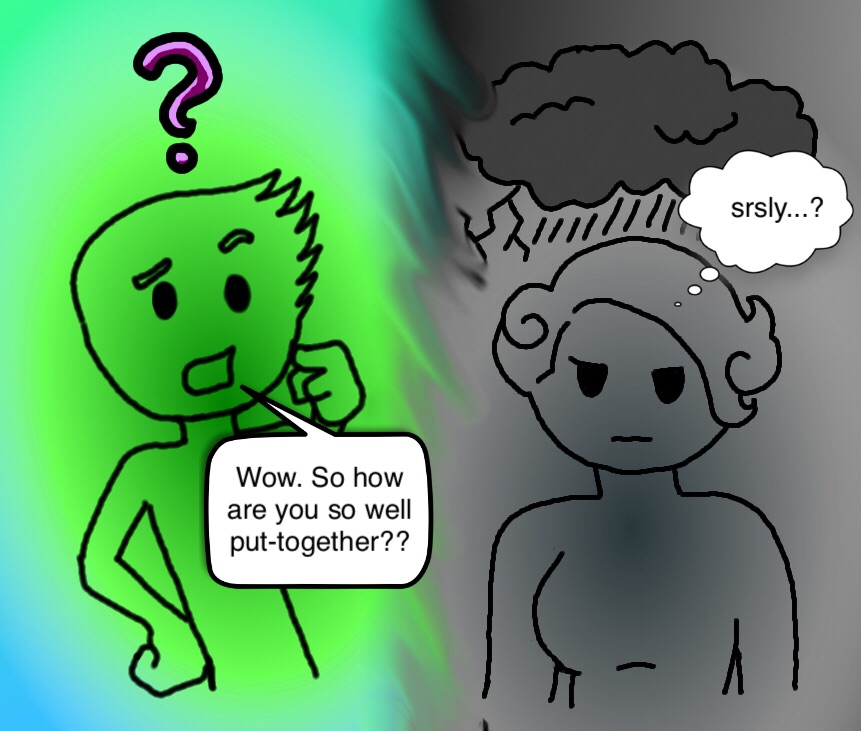
“But you always seem so confident/put-together/capable.”

imageI get that you probably mean this as a compliment, so thanks. I put a lot of time and energy into making it appear as if I have my shit together. And I typically don’t let everyone in on my little secret, so I guess: ha ha, I fooled you!

“Oh, I know what you mean! I’m totally bipolar/OCD/schizo, too!”

imageNo, you’re not. You just think it’s cute to liken your non-clinical experiences of sadness and anxiety to serious mental illnesses that require treatment. But it isn’t cute. Knock it off. Appropriating serious terms for various levels of average experiences within the human condition when you don’t actually have an illness isn’t cute and it promotes a negative stigma about those of us who actually do have chronic conditions.

“I know that you’re anxious/depressed/angry about ____, but really you should just be grateful that ____.”

imageWow. You’re right. I should be grateful for the good things that are going on — but check this out: I am a complex, fully-formed human being, and I can divide my attention enough to feel both gratitude for what’s positive in my life, AND anxiety, depression, or anger about another situation at the same time. Imagine that.

“Well, I’m not a mind reader!”

imageNo, you aren’t, and I don’t expect you to be. I don’t think you should have to anticipate and fulfill my needs the very moment they arise, but it would be lovely if you could have a little more compassion for how gut-wrenchingly difficult and uncomfortable it is for me to ask for help. I would rather floss with barbed-wire.

“You really only needed to ask.”

imagePlease see the above re: BARBED WIRE. I get that to you, and most other people, asking seems like a very simple thing. But I have been trained that asking places me in a high-risk situation where neglect, rejection, or even outright humiliation are all potential outcomes. My very being shies away from any course of action that could potentially cause me harm, and in doing so, I tend to either ignore my needs or run rough-shod over others in order to get what I need without their help. I’m sorry — I know that’s shitty of me. Please try to understand: it’s about my wonky brain, it’s not about you.

“I didn’t invite you because I knew you wouldn’t be interested/would cancel.”

imageYeah, you’re probably right. Can you do me a favor, though, and ask anyway? Because I tend to cope with stress by putting my blinders on, which lands me in a rut. By the time I look up to catch my bearings, I’ve overlooked how isolated I’ve become, and I need you to interrupt me with messages of love and support. I need you to take the time to encourage me to step out of the rut and try something new. And sometimes, I need to be dragged out kicking and screaming.

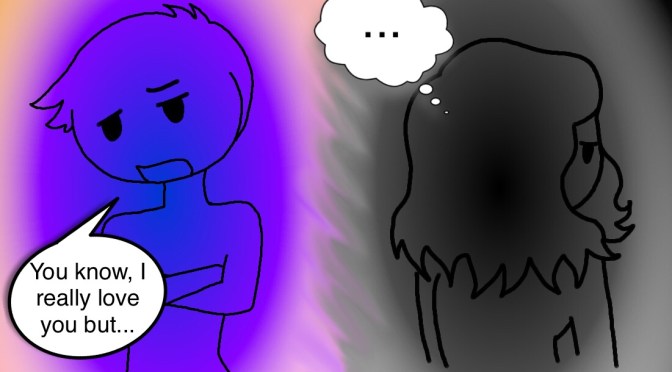
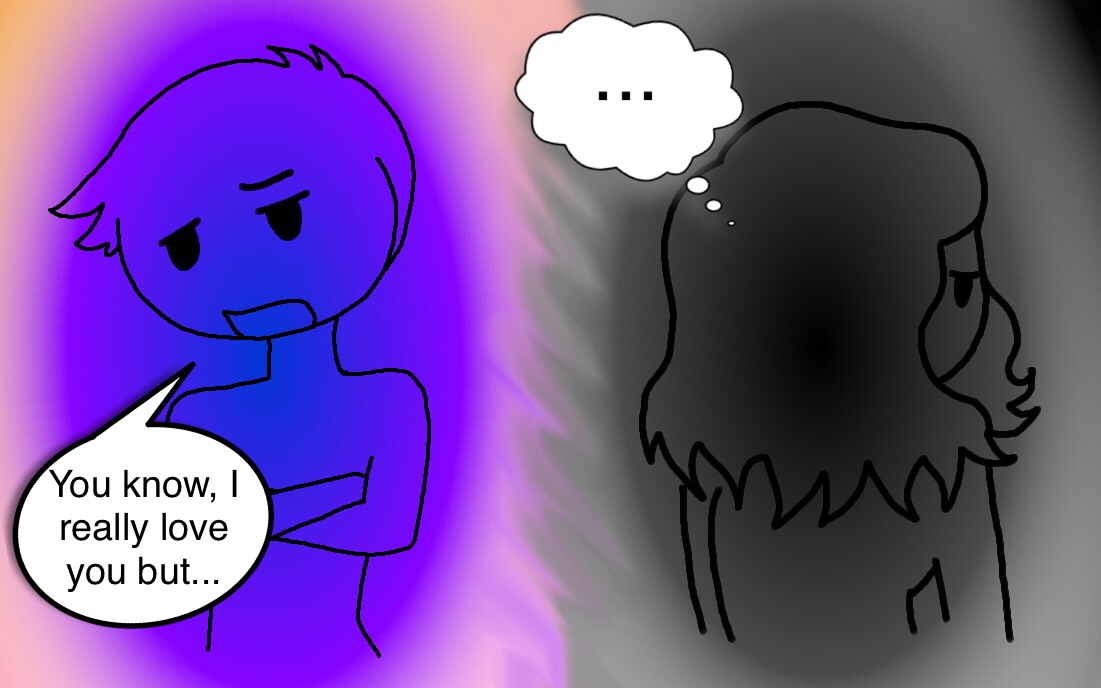
“I love you, but…”

imageDo you? Do you love me? Is it a love without conditions? And I don’t mean “unconditional love”. I mean “a love without strings attached”. Because I can’t accept love or kindness that comes bound up in expectations. I am clumsy. I will trip over my good intentions and my own words. I will tangle myself up all the strings that bind me to you, and I will hang myself with them. No question. So if this is the only way you are fit to love me, please love me less.

“Wow. This is mighty selfish of you.”

I know. I know, and I feel like crap about it. Try to understand: I am tip-toeing the line between “selfish” and “self-care” while blindfolded, forty feet in the air, and without a safety net. I don’t want to burden you, or land you with the sole responsibility of maintaining our relationship. I promise, this isn’t permanent — it’s just one of my bad turns, and I will get better. When I come out of it, things will be easier for us both. But please don’t leave me behind when things get rough. I have a lot to offer in kinship with someone patient and compassionate enough to love me in spite of my faults.
Everyone is always telling me to “hang on” when my brain tries to kill me — could you hang on, too?

I’m Not (Quite) the Poster Girl for Body Positivity

For hubby’s birthday, I decided to get creative.

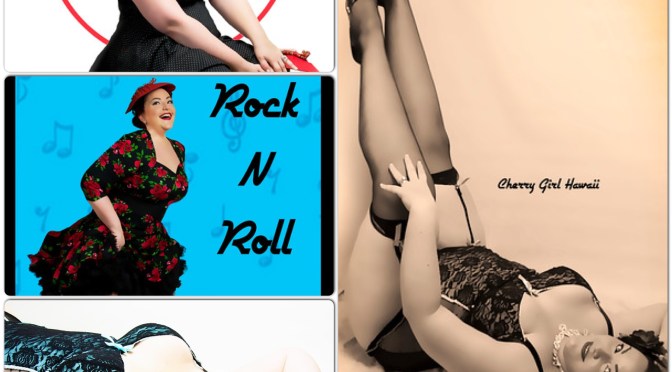
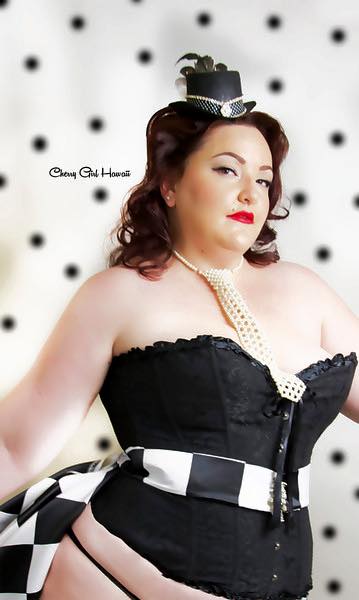
I contacted Cherry Girl Hawaii, a local boutique photoshoot company that specializes in the vintage look that I so love to emulate.

I’ll just let the photos speak for themselves.

Ahem. My eyes are up here, bud.

The modelling process was exhilarating, exciting, and emotionally taxing, but it felt really good. I hate myself in pictures, and I do not consider myself to be very photogenic, but the photographer made me feel at ease and helped me pose my body in such a way as to be as flattering as possible.

When I gifted the photos to Will on the morning of his 30th birthday, he was very pleased with them — but let’s face it, the man is pretty biased. The real moment of truth came when the pictures went public: Facebook.

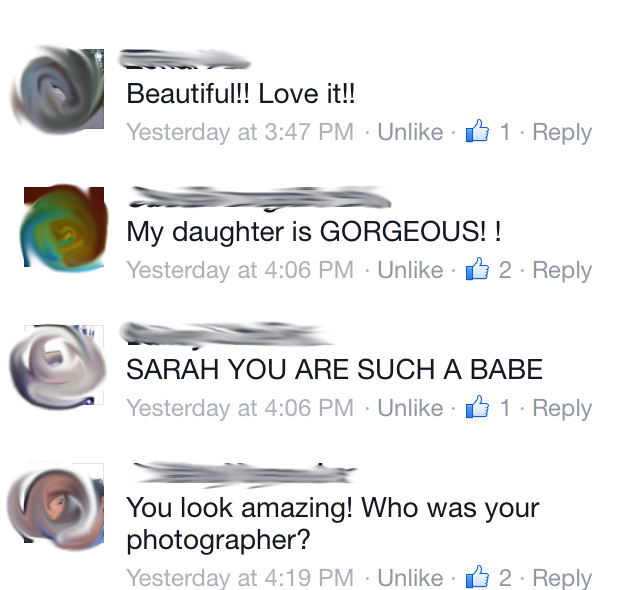
I got some wonderful responses.

IMG_5240
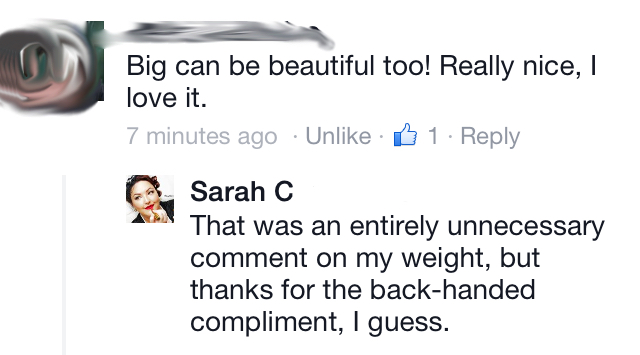
I got some so-so responses.

IMG_5235
And then I got this one from my cousin, whom I love dearly:

With great nakey-pictures, comes great responsibility.

I was very flattered, both by her compliments and by her praise. But I was also a little recalcitrant — Ooh, no, no, no. You’re giving me too much credit! I’m not the poster girl for body positivity. You can’t put me in that role, you guys, really. I hate myself more than half of the time!

My lovely friends gave me untold congratulations on how confident and beautiful I looked in those photos — and reading their wonderful comments, I felt like a phony. I did this thing, yes. And no, I don’t think I’m bad looking. But I can’t lie and say that I love my body. Even during the photoshoot, I was insecure and anxious, desperate to twist and contrive my flesh into angles and positions that might look halfway decent — at no time in the process did I really feel proud of how I look. Certainly, I felt far from flawless as the photographer (an extremely good sport!) and I squished my baby-belly into that black corset.

I did, however, feel a certain degree of empowerment.

No, I’m not thin. Never have been and never will be. I struggle to like myself, even on the best of days. I have insecurities about my person that will likely persist until the day I die. But, I did the thing anyway because no societal misjudgements, no unfair standards, or even self-put-downs are gonna keep this baby in a corner.

I can’t lie and claim to want to be another Tess Holliday. You’re never going to hear me talk about how I “love my curves”. While I admire the attitude and the message about body positivity and realistic beauty standards, I lack a certain degree of confidence and self-esteem. That being said, I know myself well enough, and I respect myself well enough, to stand up in support of my beliefs, my tastes, and my interests. I’m no less a Witch on any given day or to any given person than I am on tumblr. I’m no less a mother and a wife than I am a hard working professional. And I’m not going to let something as minor as a lifetime of insecurities keep me from showing off my hot bod, even if opinions may vary.

I guess that’s the sentiment I can be the poster girl for — I don’t like myself sometimes, but I’m not going to hide who I am. It’s not exactly “body positivity”, but it’s still pretty good.

Fake it til' you make it, kiddos.
Fake it til’ you make it, kiddos.

My Bipolar Brain Hates Me

Bipolar pushes me to the end of a rapidly fraying rope.

It steals my temper and hides it inside a grenade that I must hold gingerly, never knowing when or how it might go off.

It drives me into a manic state, where every sound is amplified and the air takes on inglorious texture.

It burdens me with terrible habits and compulsions, then robs me of the force of will to control them.

It makes me depressed so I loose interest and passion in things I once enjoyed.

It curses me with a lethargy so powerful, I can barely keep up with my toddler, my work, or the demands of daily life.

It causes me to withdraw from human contact, and then convinces me that I prefer to be isolated.

It constantly demeans and belittles me, making even the smallest transgressions feel like capital sin.

It is easily distracted, never settling on one task long enough to invest time into the task’s quality or completion.

It tells me I’m fat and ugly, then demands soothing in the form of binge-eating.

It causes me to to act recklessly, to say and do things that are potentially harmful.

It constantly warps my perception of my environment, so benign things appear hostile and minor barriers become major obstacles.

It makes me paranoid, suspicious, and jealous, robbing me of my good intentions and the ability to be happy for others and their successes.

It makes me sad — so sad that I see no potential worth in myself, my endeavors, or my future.

It exhausts me in body and in soul, such that I would rather sleep my idle hours away than face the bleak stretch of time before me.

It makes me perseverate, circling the same thoughts round and round the drain of my feeble mind until nothing makes sense anymore.

It confuses my energies, steals my words, befuddles my mind, and makes my hands feel small, inept, and useless.

This is your brain on bipolar.

Bipolar depression bridles me, as mania drives me forward into the Sun. It dampens me, as the cool depths of depression well up and weigh down my limbs, my head, my mind. It is within and without. My beginning, and also my end.

After Crash

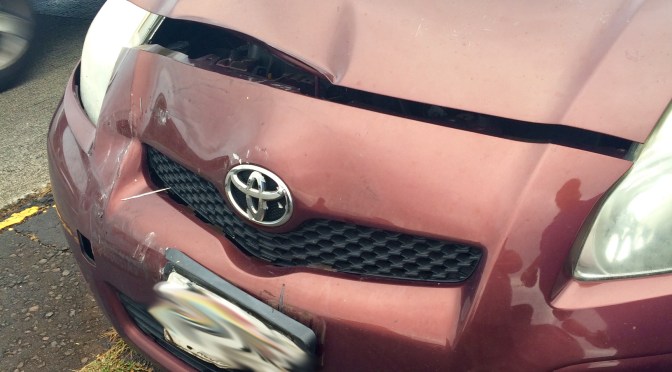
So, I was in a car wreck yesterday.

My vehicle is not supposed to be sneering at you.

I was the middle car in a three car pile-up, otherwise known as “the poor bastard whose car gets pancaked.” I’m all right, just a little scratched up, but my mental health is definitely in question. Yesterday was all anxiety and mania and hysterical crying, while today feels like an out-of-body experience. Is this really happening?

While I am grateful that the accident wasn’t worse and while I know this is just one of those things that happens, I can’t shake it off. I can’t concentrate. I can’t move. Everything I do feels like moving through molasses. Is this post traumatic stress, or is this the bipolar? My mind keeps telling me that this was so minor an accident, to continue to think on it or be effected by it is nonsense. But I still feel scared and out of control. Jumpy, like a rabbit that know it’s being hunted. I know it’s all an affectation, a side-effect of my wonky brain chemistry, but my treacherous mind continues to insist I’m in danger.

Tell me, when does this ride end? I want off.