Creative people sacrifice a great deal of themselves for their craft. It takes a lot of energy and confidence to take an idea, put your force of will behind it, give it lift, give it traction, and make it a reality. And sometimes we don’t have the freedom to tell our stories as we see fit. After all, we aren’t the only characters in our tales — there were other people there, too. Perhaps the artist doesn’t feel the need for self-preservation, but their loved ones do. How will they feel about their story being told alongside yours? I’ve struggled with this often.
We want to fight against the institution of stigma, but have to confront that the wardens of that institution are often those people who profess to love us the most: mothers, fathers, siblings, or friends. Perhaps their unconditional love and support doesn’t cover our attempts to feed our souls through our creativity. To surrender ourselves to living in silence or conducting part of our journey in secret protects their feelings, but also relegates us to living a half-life, unactualized and bifurcated by fear: truth on one side, peace-keeping on the other.
It’s important to recognize just how much power you give to others and if they are using it responsibly. There are those emotional tyrants who would rather you continue to live on the fringes, just so they can save face. They have robbed you of the rights to your own story, merely because they played a part in it and are ashamed of their conduct. And because you are caring, self-sacrificing, and willing, you will allow them to dictate how you live your life and what stories you will tell.
I have been in some abusive relationships. The militant part of me has welled up with righteous anger and the need to strike back, but I have always held myself back. I don’t want to hurt or offend with my writing — I write to feed my soul, and no nourishment is found in words that harm. But it’s more than that — I hold back because my love for these tyrants, regardless of their warped thinking, asks me to be kind. Asks me to put their need for under-rug-swept before my need for transparency. I think that most victims of emotional abuse, even physical abuse, face a similar quandary: how to do free yourself from the stigma of illness and abuse when doing so would harm your abuser, whom you love?
If I were unafraid, what stories would I tell?
All of them.
The quote pictured above was taken from author, Rachel Thompson, from a Facebook status made in June 2014. I invite you to check out more from Rachel here and here.
This post has been a couple weeks in the making, because, you see, I wanted to have some facts, some answers, before I told any part of this story. Otherwise too many people would have read this and then agonized right alongside me as I waited for a neurologist’s consult, a test, a diagnosis — all the things that follow the heart-stopping moment when your pediatrician starts asking too many follow-up questions.
Let me explain:
M had her six-month check up on the second. We went over the usual stuff: height (50th percentile), weight (50th percentile), head circumference (95th percentile… kid’s got a big melon). Then we talked about her eating habits and her development. That’s when I brought up the funny “head-dipping” thing that Moira had been doing the last few weeks — she’d be playing or sitting in someone’s lap, what have you, and then her head will drop until her chin hits her chest. She’ll stay like that a moment or two, then pick her head up and carry on doing whatever it is that she was doing before. I thought it was a kind of funny, idiosyncratic thing that she was doing — until our pediatrician released a litany of follow-up questions while furiously typing information into her computer. “How often is she doing this? Are her eyes open the whole time? Does she respond to her name?” When I thought about it, it was happening at least once a day. Her eyes were always open, unblinking. She didn’t always pick her head back up when we said her name.
And that, my friends, is when the red flag went up.
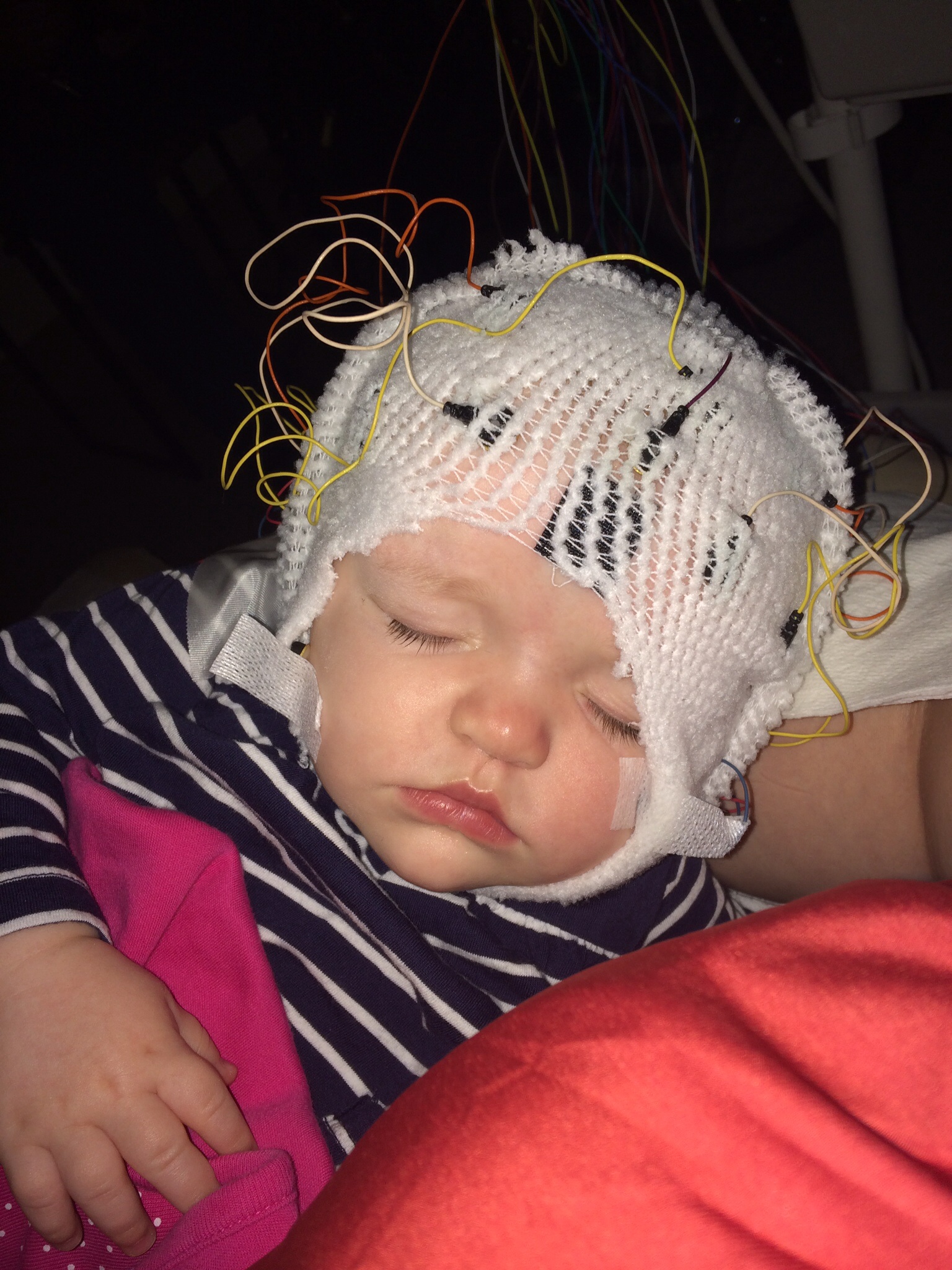
Once she had asked all the questions she could think of, our doc slowed down long enough to say that it looked like M was having petit mal seizures, not uncommon in children her age and mostly benign. She was going to get a neuro consult and get back to me. So we went home and waited. Ultimately, it would a week for Moira to get an EEG and another few days for the results. And thank God, or Buddha, or the Great Powers That Be: she’s fine. Nothing on her EEG to indicate that she has any kind of seizure disorder. Hallelujah.
But first, Moira got to try on a snazzy new hat.
It was a learning experience for me: coming to terms with the possibility that something could be wrong and managing to respond without the fight-or-flight response. A great deal of my anxiety stems from losing two parents to cancer and the ensuing post-traumatic stress. I’ve always been a worry-wort, but when my stepdad and later my mom got sick and died, it did a real number on my ability to codify which fears were rational and which were not. There I was at 21, living in another state far from my remaining family, having just lost both parents, just as I always feared I would. What does it do to a person to have your worst fears realized and come out on the other side? For me, it confirmed (in my addled, depressive state) that the worst possible thing can, and will, happen — so you had better be on guard at all times. That heightened sense of impending disaster became the background music to my whole worldview. I was always — always — waiting for the other shoe to drop.
I’m proud of myself for beginning to come out from under that cloud of anxiety. It’s evident in the way I responded to Moira’s potential diagnosis — I didn’t panic. I didn’t obsessively search the internet for every vague disease that she could be suffering from. I was certainly nervous, and yes, I cried a little when confronted with the possibility that my child was ill, but I handled it. And the proof is in the pudding, so to speak.
Yup, here we are, and I’m keeping my shit together like, “Whoa, I’m the mom now…”
In the wake of the shooting in Isla Vista, a conversation entered the mainstream media about the idea of male entitlement and the associated societal structures that breed this sort of mentality. Rape culture. Ingrained misogyny. Got me thinking, where else do I observe the abuse of dominance? It’s not just in the minds of the “friend-zoned” or out-and-out woman-haters. It’s in all of us. It’s everywhere. And women contribute, too.
In particular, it occurred to me that there is a fundamental conflict between what women say and what we do. For example, there are scores of books and movies dedicated to the average American woman’s notion of romance. You could call it “girl porn”, as seen in the film Don Jon: Men like to watch people getting it on, but women? Women like romantic comedies, romantic dramas, harlequin romance novels, Disney-style fairytales. (Parenthetically, it should be noted that OF COURSE there are females that enjoy pornography. But I’m going to wager a guess that most women go for the “romance porn” stuff.)
In these books and films we see male characters who are often disrespectful of a woman’s right to her own body, tending to act forcefully, or even aggressively, to assert their male right to female attention. These characters are written as Alpha-males, dominant over their women and their environment — they know what they want, they feel entitled to it, they are persistent, and they get it. Alternately, we have the “wounded soul” male — a person whose whole life experience has been so fraught that we can hardly blame him for being so flawed. We read Twilight (crazy obsessive stalker) and 50 Shades of Grey (emotionally unstable man-child who is borderline abusive, but has a heart of gold) and we swoon over these damaged male characters who treat their women poorly and possessively. Somehow, the lonely, needing quality gives these fictional men the right to exhibit aggressively toxic masculinity, particularly in their pursuit of the female protagonist. The stalking, the jealous rage, the single-minded focus of the male’s attention on the female — our culture has conditioned us to believe that these stunts are romantic. And we just eat that shit up. Men see that, see the hypocrisy in it, and come to the conclusion that all women a.) don’t really know what they want, b.) are sending mixed messages/being manipulative, and c.) that this crap:
This is what women want.
Don’t get me wrong, I’ve read them all. I like them. They’re my guilty little pleasure. Some romance novels are actually very well-written and well-balanced, depicting not an over-hyped ideal, but a realistic struggle that we can all relate to. In a genre largely written for women by women, there is a tremendous opportunity to extol the virtues of sexual equality. But even when it comes to less delicately written erotica, I enjoy getting lost in the romance, the intrigue — mentally substituting the weak female protagonist for myself (because that’s exactly what these books are for), and embarking on a whirlwind romantic flight of fancy.
But then I stop. I put the book down. And I think about how I would never, ever, EVER accept that kind of treatment from my partner in real life. I think it’s time to own up to the truth: that, unfortunately, my partaking of this form of media is complicit acceptance ingrained misogyny. And that it is a bit hypocritical.
Women can, and sometimes do, send mixed messages. But it isn’t because we’re emotionally manipulative or cunning. We’re taught that clear, explicit messages of arousal or consent are unromantic. That being assertive is slutty. That you have to wait for the man to make the move. A woman that propositions a man is a slut, but women who are selective or discerning when selecting a sexual partner are prudish and condescending. Those words in bold? I don’t want to be any of those things, but it’s a “damned if you do, damned if you don’t” proposition. I know a lot of women who feel the same way.
I think it’s time that we all start taking responsibility for the ways in which our culture has altered our consciousness on sexual norms. For women, that means coming to grips with the fact that we are literally buying into patriarchy — not just by spending money on “romance porn”, but also spending billions of dollars every year on attempts to embody a standard of beauty that is unrealistic and psychologically, economically, and politically damaging.
Truthfully, I like getting dolled-up. I do my hair and make-up like a 1950’s pin-up model, not to attract male attention, but because it makes me feel good about myself and gives me confidence. But lest I forget that I am a product of my culture and my environment, I have to ask myself, how much of what I like is because I really like it and how much is because I’ve been conditioned to like it?
Girls grow up in a world where we are taught that our primary (if not our only) commodity is our beauty. While it’s not necessarily taboo to be an intelligent, articulate, or independent girl, it’s not so often praised either. I, for one, clearly remember feeling the need at eight years old to suck in my tummy when passing boys in the supermarket, but I didn’t begin pride myself on my smarts until I was in my 20’s. And that wasn’t because I was raised by misogynists (I wasn’t) or because I grew up in an environment that devalued educational accomplishments (I didn’t). It’s because even at that young age, I understood that my worth as a human being was inextricably bound to my appearance, so I had better make it good.
Women and men alike need to come together in the spirit of finding balance and establishing equality — first by confronting our previously unacknowledged hypocrisies and universally accepted “truths”, and then by making a commitment to change them. In the last few weeks I’ve heard a lot of people say “feminist” like it’s a dirty word, I think because there is a common misconception that being a feminist means “a women who hates men“. To assume such a thing is to miss the point entirely, and ultimately, to doom the fight by misdirecting the conversation (once again) towards hate and extremism. It’s about equality— and if that’s what we want, ladies and gents, then we all need to come to terms with the ways in which we directly or inadvertently add to the imbalance.
I recently wrote about how I’d rather be manic than be depressed.
Because mania is such fun.
Well, now I’m depressed, so fuck the me who said that.
What bullcrap.
Depression sucks. Mania sucks.
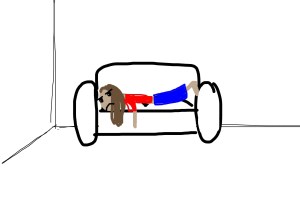
Mania makes me want to do all the things at once. When I’m manic, I truly, honest-to-God see the madness within myself. Depression robs me of the will to do anything — including things I like to do. Things that make me feel better. This is pretty much all I can bring myself to do:
This is not conducive to long-term happiness. Or anything, really.
In a perfect world, there would be no mood disorders. I would be a reasonable, emotionally stable person: happy when you’re supposed to be happy, sad when you’re supposed to be sad, and the rest of the time, a contented medium. But I don’t live in a perfect world, and as such, I’m a bloody mess a good portion of the time.
I’m a manic depressive. I cycle through ups and downs not unlike a pendulum that swings back and forth. Sometimes, though, I swing over to one side and the pendulum freezes in midair, hangs for a while in that position, before swinging back the other way. Coping with my moods often means hanging out in either an amplified or a depressed state, just waiting for the switch to get hit. In those moments, I find myself thinking that between the two, I’d much rather be depressed.
Depression is a cool lagoon, contemplative and serene with it’s dark, unfathomable depths. It washes over and caresses me, encourages me to be silent, withdrawn, creative. Depression shuts my mouth and opens my eyes. Be invisible. Observe. It says. Depression makes me tired and encourages me to sleep. To take naps. To lie still with my eyes open and day dream. It is calm, relaxed, and above all, resigned. While I am adrift in these waters, there is nothing to do, nothing to say. There is only the wait (the weight) — because I know that eventually the cowl will be removed from over my mind. I need only be patient and not give in to the sadness. Feel the waves wash over me, and not let the current drag me under. I feel well-equipped to handle my depression.
But then there is the other end of the spectrum. The Mania. The spark, the fire, the catapultic launch from the cool, contemplative waters of depression into the frenetic nuclear combustion of the sun. It consumes me, every inch of flesh suddenly alight and crawling. My every thought transforms into a long run-on sentence, there is a frenzy underneath my skin, in my head, in my chest. A need to go in all directions at once. All of my reactions are on a hair-trigger; one false move and like a match to a trail of gasoline fumes, I go up in flames.
My body trails along like a flag hung off of the back of the roller coaster that my mind is riding. Up, down, side-to-side, whipping in the air currents, fraying at the edges. My mind races and with it my heart pounds in my chest: fight or flight activated but there is no danger. The only immediate threat comes from the beast ravaging my mind.
Mania is an assault on my senses. The frenzy of my mind overtakes and disables me — I need to do everything, and therefore find myself paralyzed, unable to do anything but imagine all the ways shit can go wrong (Oh, hello anxiety disorder, glad you could join the party). In how many ways can I obsessively envision my loved ones coming to harm? How shall I plan and create contingencies for all the ways in which life is about to become up-ended? Allow me now to sit here and wait for the sound of the other shoe dropping.
Mania feels like no end in sight. My mind will continue to race like this, my heart to pound like this, until I hit some proverbial or physical wall that will arrest my ascent. Until then, I’m just along for the ride. But all that energy has to go some where — blood will out. So maybe I clean the bathroom grout with a toothbrush. Maybe I binge eat myself sick. Maybe I take it out on my own self, picking away at nails, flesh, and other offending tissues until the beast is satisfied with her pound of flesh.
Mania forces me to eat myself alive in mind and in body.
When does this ride end? I want off.
I don’t feel all together prepared to manage prolonged bouts of mania. Maybe medication would help, but being a breast-feeding mother of a six-month-old, I’m not willing to take the chance that she could wind up medicated too. Therapy is also only helpful up to a point. I can’t see my shrink every time I find myself flung up into the air by a manic episode. I work my way through the calming techniques, the breathing exercises, the threat assessments that he has trained me on, and I try to remain patient.
This, too, will end. My new mantra: This, too, will end.
I guess you hear it all the time, but until you’re neck-deep in motherhood you never quite realize how irrelevant all of your plans are. I have daydreamed about becoming a mom since I was a teenager — I knew what names I liked, what kind of clothes I wanted them to wear, how I was going to care for them. I had visions of sweet, cherubic faces dancing in my dreams like proverbial sugarplums. Courtesy of college family resources and psychology courses, I knew how to facilitate every stage of their development. I had every intention of a doing prenatal yoga, undergoing natural childbirth, being an unapologetic breast-feeder. And then I got pregnant and realized that life doesn’t give a shit about my plans.
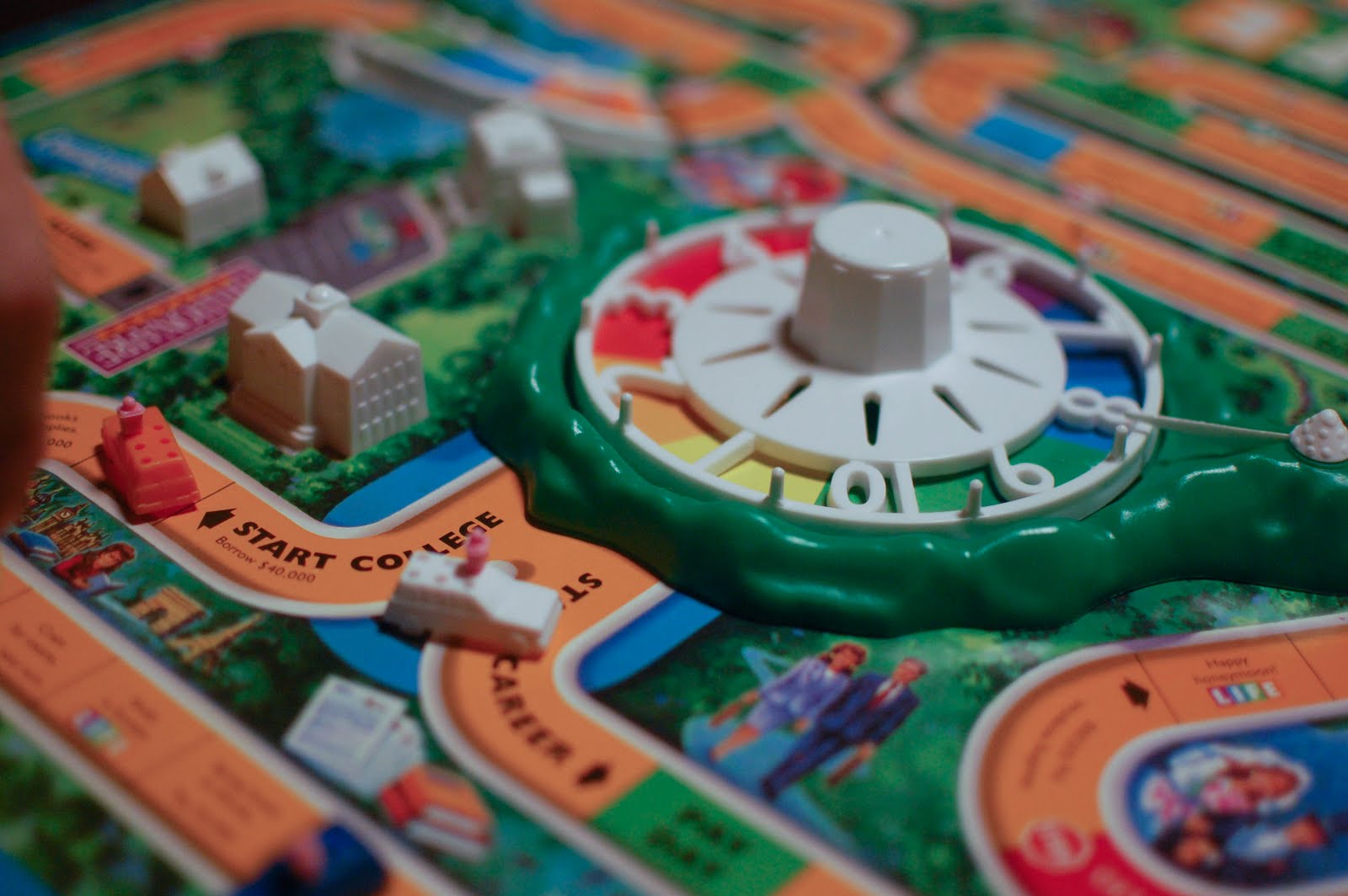
If you want predictable, you’re better off with the board game.
I didn’t even know I was pregnant until I almost lost the pregnancy. Unbeknownst to me, I was 6 weeks pregnant when a gush of blood signaled that something was very wrong. In the emergency room, they confirmed I was pregnant, then told me not to get my hopes up: “At this point, if your body is going to spontaneously abort the pregnancy, there’s nothing we can do about it.” So we went home and prayed. We prayed for three straight weeks until I went to first ultrasound and saw the heartbeat. Finally, I was able to breathe again — my body hadn’t betrayed us and killed our baby.
The rest of my pregnancy was smooth sailing, though not entirely what I had expected. I was way more tired, my body under way more strain, than I had been prepared for. Forget about yoga, walking the dog, or getting up off the couch — I’m willing to go from bed, to work, and back to my sofa, and there’s nothing you can do to convince me otherwise! Forget the well-rounded pregnancy diet, too. If it smells good, I’m going to eat it, and I can’t be held responsible if animal proteins aren’t on that list.
It turned out okay though. We made it to November without incident, my OBGYN complimenting me on being the easiest patient on his roster. Having read about the correlations between epidural use and increased likelihood of complications leading to Caesarian section, I was hoping to experience natural childbirth. I read everything I could get my hands on, interviewed friends, developed a birth plan with my doctor, and practiced breathing exercises. I drafted my friend as a doula. We stocked up on calming essential oils and packed my bag to allow for a quick departure to the hospital. As we approached my due date on November 9th, I felt we were pretty well prepared for the inevitable. Baby had been locked and loaded since the end of October and all signs pointed to a timely delivery. I did everything the Big Book tells you to do in order to help things along: had sex, walked around the neighborhood, exercised on one of those gigantic balls. Short of puncturing my own water bag with a knitting needle, I tried everything. Alas, it wasn’t meant to be: at two weeks past my due date, we threw in the towel and acquiesced to an induction by Pitocin drip.
You know what happens when you go into labor under Pitocin?
Hint: It ain’t pretty
Well, first of all, your contractions tend to be twice as long and a million times as intense as those caused by the natural labor-inducing horomone, Oxytocin. Try managing six hours of teeth-gritting, horrifyingly protracted spasms in your gut — I couldn’t do it, so I opted for the epidural. It made the pain go away, but not the long, arduous contractions that were squeezing my baby every three minutes. Her heart rate dropped from 120 beats-per-minute down to 60. Turns out my daughter couldn’t handle the Pitocin, either.
I bet you can guess what happened.
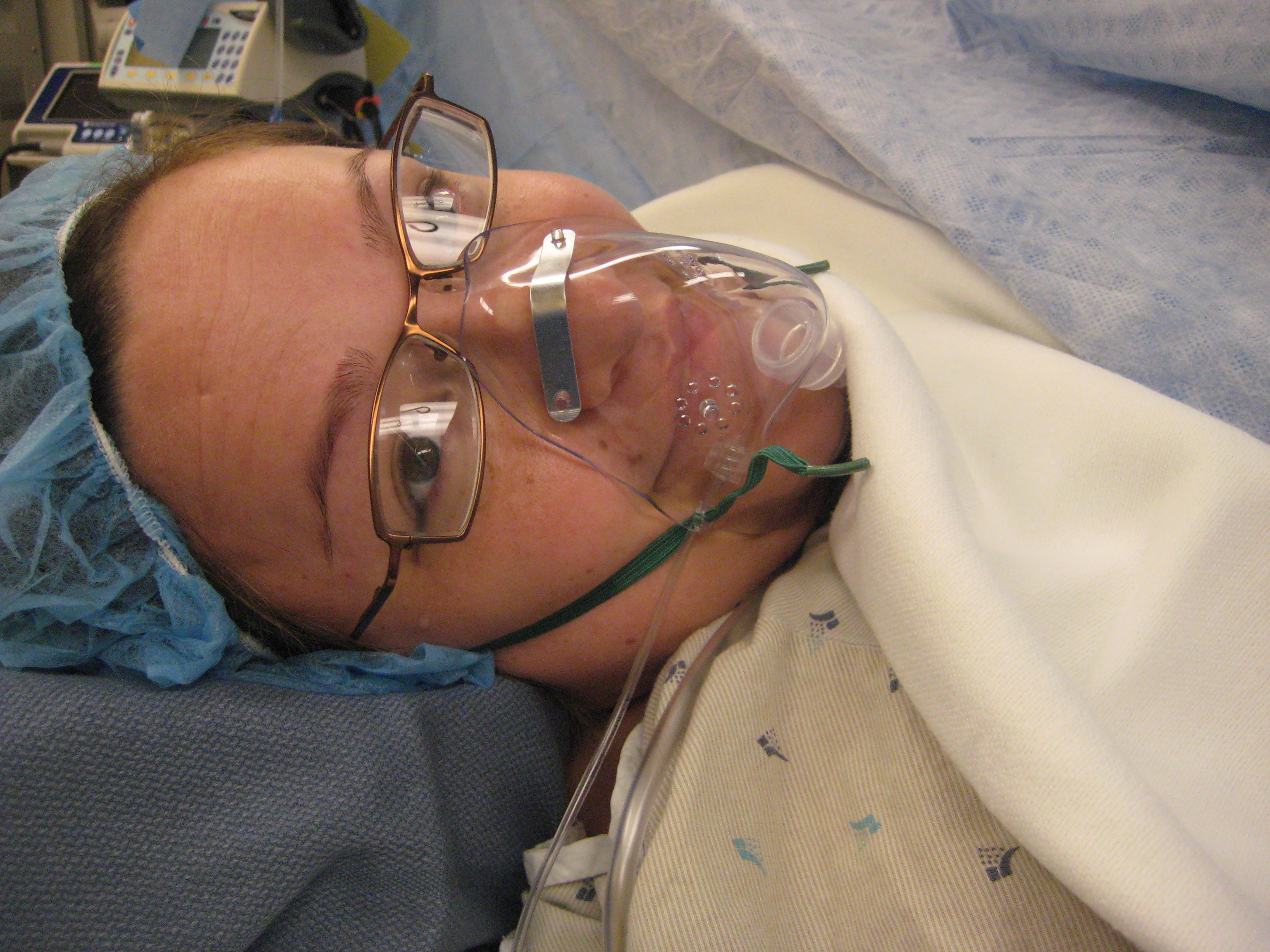
Yeah, that’s me, crying tears of, “Oh my God, what the fuck? One moment I was in the L&D room and the next I was rushed into surgery, holy crap, they’re cutting me open.” The whole time I lay strapped to the surgical table, arms spread out like Jesus on the cross, I kept thinking, “Ok. Well, so I didn’t get to labor the way I wanted. And now my delivery is going to be very different from what I had planned. But she’ll be here soon. And then we’ll cuddle and do the skin-to-skin thing that everyone’s always going on about, and everything will be fine.” Even after Moira was born, though, things went a little off-plan: she spent the night in the NICU, and I spent in the night in recovery. Once we were reunited, we had to learn how to breastfeed, and that didn’t come easily either. As we struggled, Moira and I, to hit our stride, those last visions I had of myself as Earth-Mother Incarnate went out the window. This was the big leagues. It was about survival, by any means necessary.
And it continues to be. I’m definitely not a crunchy-granola kind of hippie earth-mother I thought I’d be. Despite what I learned in FAM-R or Childhood Psychology, I don’t actually manage to pick her up every time she cries. There are even times when I leave the room and make her fend for herself while I run to the bathroom to pee (gasp!). Now, we’re on to solid foods — will I manage to make everything from scratch and eschew store-bought baby food? Only time will tell. I still have moments of panic when my plans go awry, but then there are certain things I can’t bring myself to get huffy over. It’s just much, much easier to go with the flow. From conception, to gestation, to delivery and beyond, nothing happened quite the way I had intended it to. I think I’ve made my peace with that.
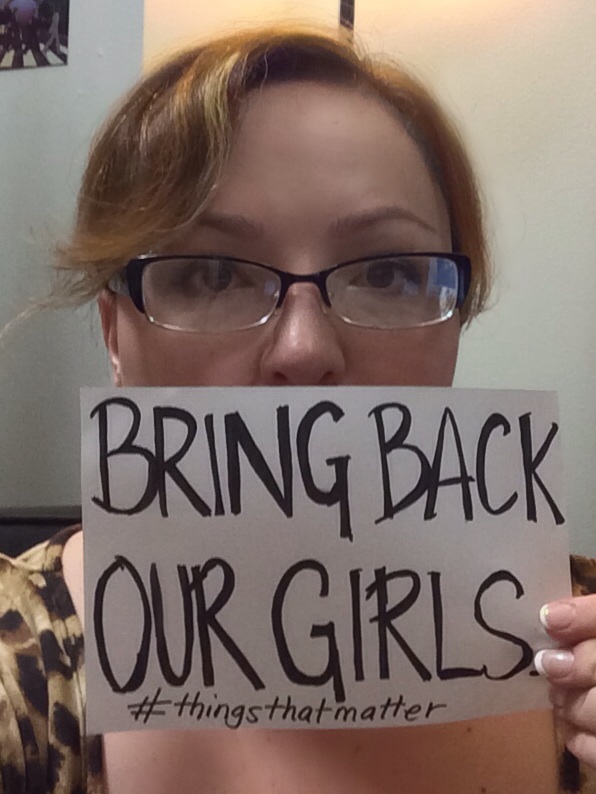
Sometimes things happen in the world that throw my own struggles into very hard relief. I was going to write this morning about the impact that this book has had on me in the last few days. Then I read the news, and I just couldn’t write about anything else.
Yes, I am a motherless daughter, the child of an alcoholic, and a sufferer of mental illness. But I don’t live in fear of being kidnapped, or having my child kidnapped and sold into slavery or worse. I cannot begin to fathom the horror and complete desolation of those parents — those daughterless mothers. Picturing myself in that scenario so cripples me, my flesh begins to crawl and I have to forcibly redirect my mind away from such a monstrosity.
May is a crummy month for people without a mom. More than at any time of the year, there is a constant reminder that you have lost that most influential person in your life.
Thank you for that fine offer, Pandora, but no. I’m not sending anyone flowers this year. Again.
Even as I worked in my office today, there was a Mother’s Day Craft Fair going on outside. Nope, no thanks. I don’t want to look through the various trinkets and see what she might have enjoyed.
For the past several years I’ve been quite happy to celebrate my mother-in-law on Mother’s Day and leave it at that. But I’m a mother this year. There are a multitude of new layers to my usual Mother’s Day grief that weren’t there before.
In a case of bizarre synchronicity, I found myself having a meltdown over my motherlessness just earlier this week in reaction to something that had nothing to do with Mother’s Day approaching and everything to do with needing to talk to my mother. It’s possible that subconsciously, I was feeling a little bit off-center already due to the holiday coming up and was therefore extra sensitive, but whatever the reason my desperate need to speak with Mom coupled with my despair at leaving my daughter in the care of others while working and my umbrella fears of inadequacy converged to create a big, unholy mess. At the end of the day, I sat down with M in my lap and thought that all of it, all the tears I had cried that day, were actually about my need to be reassured that I’m a good mother — and the person I needed to hear it from isn’t around anymore.
Truthfully, I don’t miss her with my whole heart every day. Most days, in fact, I’m practically normal. But sometimes — and more often since becoming a mother myself — there is a day when I need her input. And what I’m learning is that this is normal. Particular to the loss of a mother, the grieving process doesn’t end at acceptance — it doesn’t end at all. It is a process, and ebb and flow of sadness and peacefulness, that continues for a lifetime. This is a comfort to me, as there have been several exasperating moments over the last six years when I’ve wanted to bang my head against the wall — “Why aren’t you OVER it already?!” Well, because I’m never going to “get over” it or “past it”. “Moving on” really isn’t an option for those experiencing this kind of grief. Our roadmap of the grieving process is really a curriculum of coping techniques and emotional management. And then being kind to yourself when you have days during which coping is unmanageable. As Hope Edelman says in her book Motherless Daughters: A Legacy of Loss, there will be days when you are just as sad as you were on the day she died. And that’s okay.
I suspect that this Mother’s Day will be both the same, and a little different, from years past. I will miss Mom anew this year, because I’ve joined her ranks and she isn’t here to share that with me. I’ll give flowers to my mother-in-law and my hanai-mom, because they have graciously mothered me in my mother’s absence. And I’ll finally experience Mother’s Day from the other side of things — a side that hopefully includes a little bit of sleeping in and breakfast in bed.
In other news, my month-long hiatus from Facebook is nearly finished. It’s been an interesting experience. In restricting my access, I realized just how much time I have spent surfing the social networking site (read: too damn much) and how much stress and anxiety is caused by participating in Facebook’s social politics (read: you can’t fix stupid, but you can watch it in action everyday on Facebook!). I think this experience will strongly influence how I use Facebook in the future.
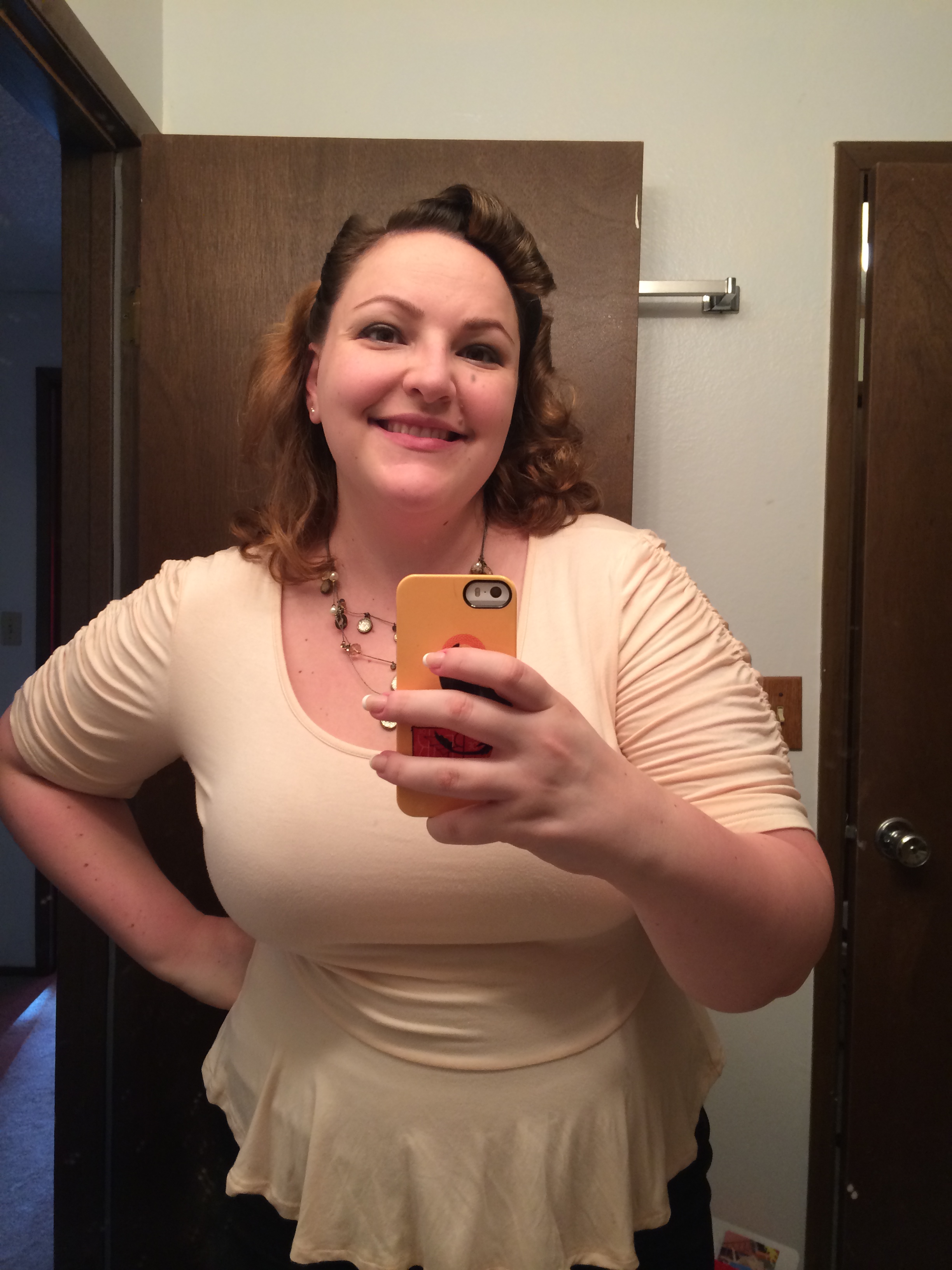
First time out, not too shabby. But still, I really have no idea what I’m doing.
Parenthetically, it should be noted that I don’t really know how to do the whole “selfie” thing.
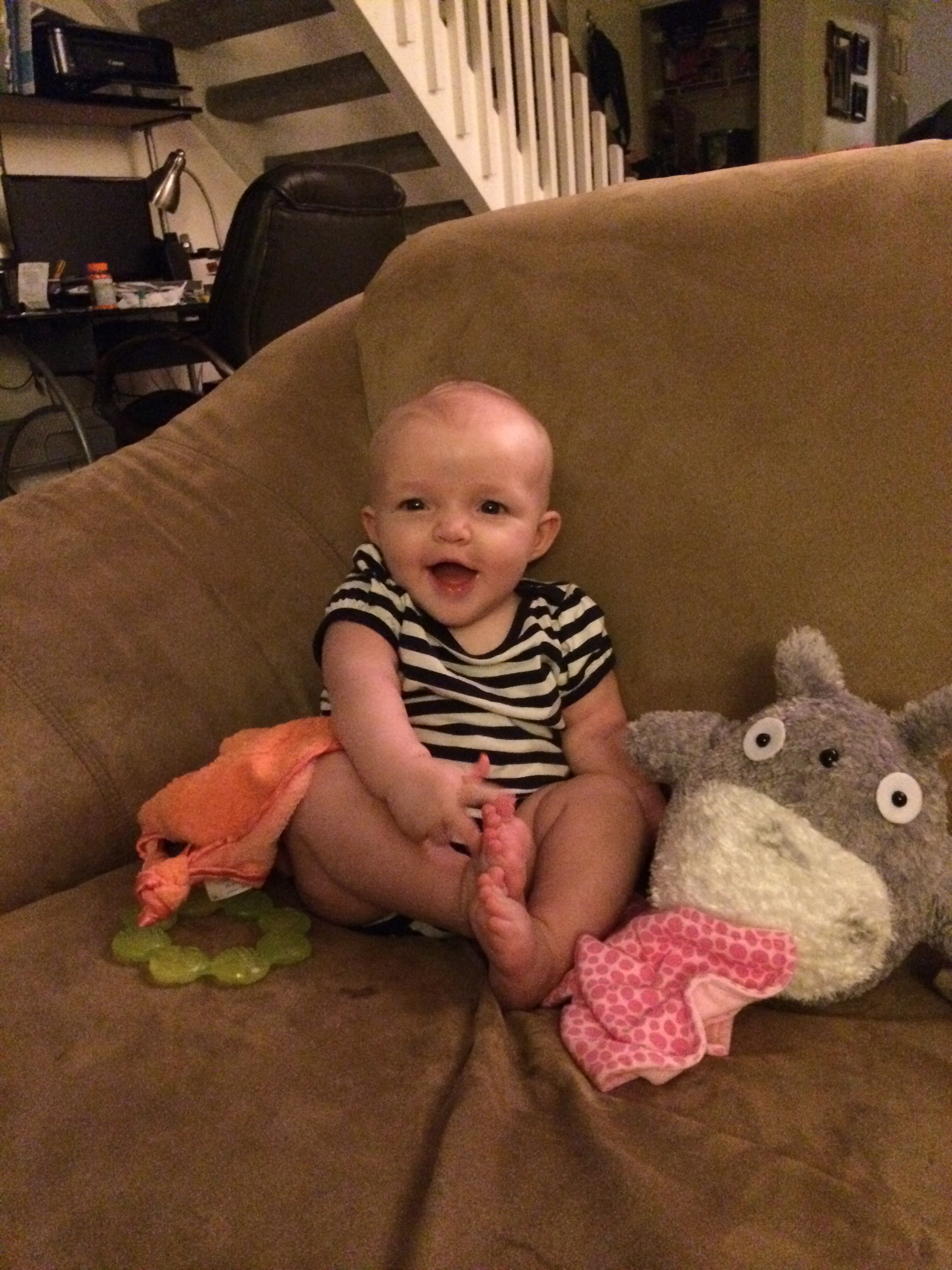
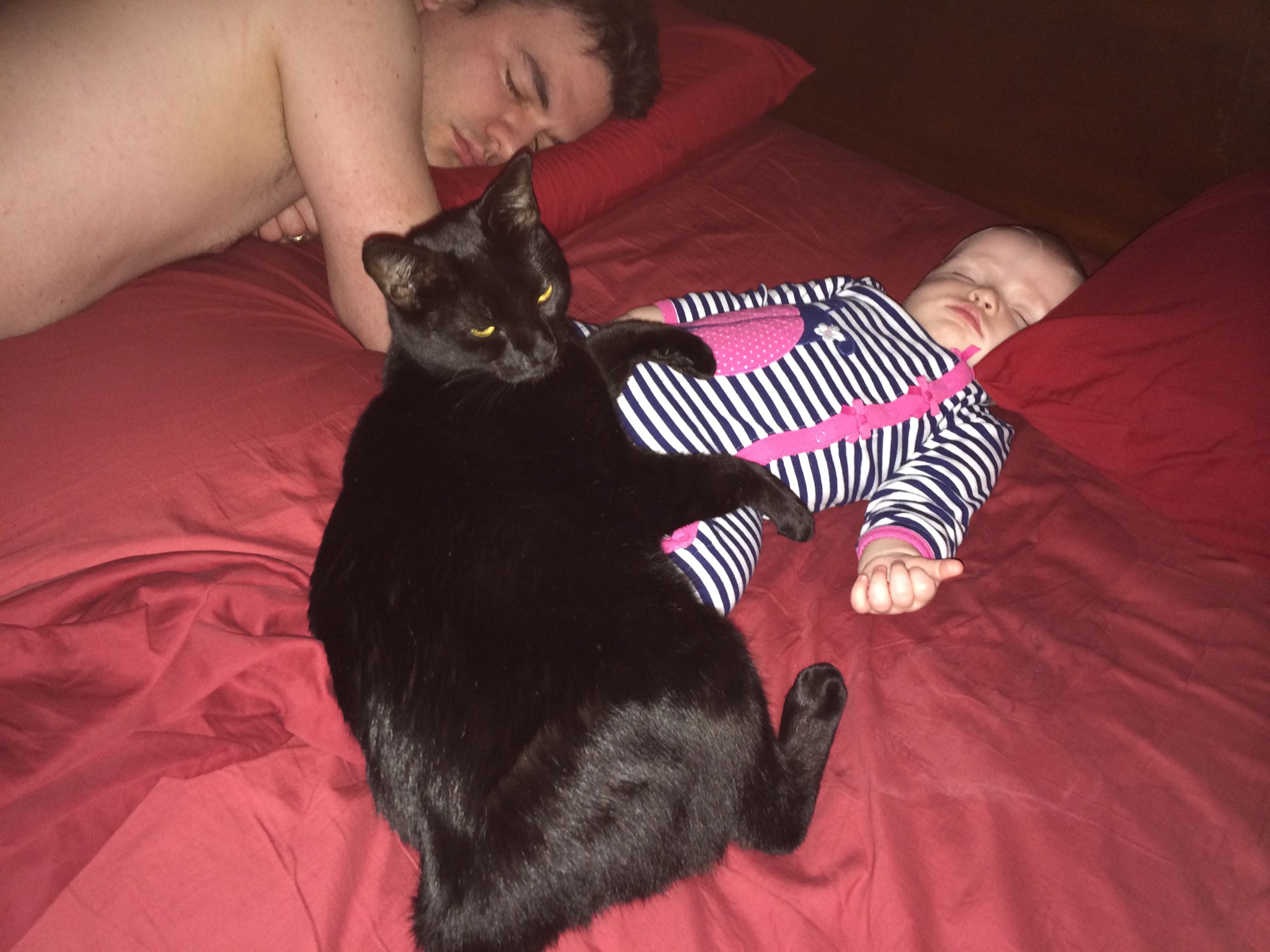
We also celebrated M’s fifth month of being alive. She’s now sitting up, babbling, and teething in earnest. But I think the best thing is that the cat has finally started treating her like a member of the family, rather than some slightly frightening alien creature.
She is now bigger than Totoro — my, how the time flies.“I claim this tiny human in the name of King Kitty.”
Recently, after having a talk with my hanai mom, I started to think about parents who love their children unconditionally. No brainer, right? Alas, it is not always so. Some people are orphans in all but name, having lost, due to some perceived slight, the love of a parent — the one person (or people, since most of us have at least 2 parents) who is supposed to love you no matter what.
That’s what I used to think unconditional love was: “I will love you no matter what.” But when I thought about it some more, it occurred to me that our moms and dads, many of them just doing the best they can to grapple with their own emotional baggage, really do love us unconditionally — in the “love you no matter what” sense — even if it feels like they don’t. However, what some parents don’t know how to do is love us without conditions. Love with no strings attached. Love that says, “I will love you, period. With no expectations of receiving anything in return. With no caveats. I will love you ceaselessly, independent of who you are, what you do, or where you go in life. I will love you because of who you are, not in spite of who you are. Period. End of story.”
The no-strings-attached kind of love says, “I will make to assured of my love for you, no matter the time or distance that separates us. You do not need to make yourself worthy of my love. You do not have to earn my love. My love encompasses all of your being, past, present, and future, regardless of where you go or what you do. My love will carry on even if we are angry with each other, even if we hurt one another or loose sight of the reasons we loved each other in the first place. I. Love. You.”
That, I think, is how every one wants to be loved.
And if we don’t get it from the people who brought us into the world, well, then we go looking. In a recent post, I talked about how my life has come to be greatly enriched by the Hawaiian tradition of hanai family. I’m pretty easy with love, and as such, I have a tendency to collect family. You see, I’m the kind of person who loves easily and brazenly, with very little thought as to how or why. Case in point with the concept of “family”: once I love you, you’re in. You’re in for good. I’m going to love you forever, even if at some point we have a falling out and we don’t talk anymore and we never lay eyes on each other ever again — rest assured, I’m out there, still loving you. I will love you without conditions.
That’s the kind of love that makes us feel secure. The kind of love that says, you really can go home again. No one wants to walk through life with a sword over their head, worrying over the threat of a severed family tie resulting from some innocuous misstep. There are good reasons, surely, to sever the bonds of family, but how many times does it happen just because someone’s pride of injured, or because one person passes judgment on another? How many of us live our lives to a lesser degree in order to maintain a relationship with someone who loves us, but whose love comes with strings attached? How many of us, fearing reprisal, remain suspiciously silent?
The Real Sarah C. Project is me breaking my silence. This is me, loving my own self, without conditions. This quote from Marianne Williamson, passed on to me by my dearly departed mother, sums it up well:
When we allow others to shine and make manifest the Divine within, we are loving them without conditions. So, in the words of the immortal Firefly peacemaker, Kaylee, go be shiny, y’all.
Our deepest fear is not that we are inadequate. Our deepest fear is that we are powerful beyond measure. It is our light, not our darkness, that most frightens us.’ We ask ourselves, Who am I to be brilliant, gorgeous, talented, fabulous? Actually, who are you not to be? You are a child of God. Your playing small doesn’t serve the world. There’s nothing enlightened about shrinking so that other people won’t feel insecure around you. We are all meant to shine, as children do. We were born to make manifest the glory of God that is within us. It’s not just in some of us; it’s in everyone. And as we let our own light shine, we subconsciously give other people permission to do the same. As we’re liberated from our own fear, our presence automatically liberates others.
Read more at http://www.snopes.com/quotes/deepestfear.asp#fTguidUBICrS4c9V.99
Our deepest fear is not that we are inadequate. Our deepest fear is that we are powerful beyond measure. It is our light, not our darkness, that most frightens us.’ We ask ourselves, Who am I to be brilliant, gorgeous, talented, fabulous? Actually, who are you not to be? You are a child of God. Your playing small doesn’t serve the world. There’s nothing enlightened about shrinking so that other people won’t feel insecure around you. We are all meant to shine, as children do. We were born to make manifest the glory of God that is within us. It’s not just in some of us; it’s in everyone. And as we let our own light shine, we subconsciously give other people permission to do the same. As we’re liberated from our own fear, our presence automatically liberates others.
Read more at http://www.snopes.com/quotes/deepestfear.asp#fTguidUBICrS4c9V.99









 The Real Sarah C.