Category Archives: Stuff Sarah Says

Mean Girls

“Women are such catty bitches!” I said to my friend, completely exasperated. She laughed and I laughed, and we both understood — there is no animosity between you and I, but get a group of females together in any greater number, and shit just hits the fan.

Why can’t we all just get along?

I am not, nor have I ever been, especially popular. I don’t have a raving social life. I am very good at maintaining close friendships, but awkward when in a group. I’ve never been a member of a clique, though it wasn’t for lack of trying in my adolescent years. There was a time when I so desperately wanted to fit in. Typically, people join groups that align with their personal interests, finding kindred spirits among the other members, but I’ve never had success in that way. Maybe I was an ASL student, a writer, a pagan — but whenever I tried to assimilate into an established group of those individuals, I still found myself feeling like an outsider.

Instead, I excelled at close, personal ties with other outsiders. Maybe we’re weird, but at least we can be weird together, we would say. I felt I had my niche. If I couldn’t be popular, at least I knew who my real friends were. I waited patiently for college and for my grown-up life to start. Adulthood, they promised, would be different.

They lied.

It has been ten years since high school, but I still feel like I’m surrounded by mean girls. Girls who view each other as competition, rather than colleagues; potential threats rather than potential sisters. Contrary to what our Mommas told us, it doesn’t always get better — bullying and social aggression is still prevalent throughout adulthood. To add insult to injury, bullying in adulthood is most commonly seen in females against other females. WAY TO GO GIRLS! While we were talking about women’s rights and equal treatment, we forgot to confront the idea that internalized hatred influences how we treat each other.

One might think that those same mean girls from school just grew up and continued to be mean, but studies suggest that this isn’t necessarily the case. Often times, it is the former victim of the schoolyard bully who grows up to utilize relational aggression in order to exert power over her peers. Prolonged feelings of powerlessness awaken the primal need to establish one’s self as an aggressor in order to regain power and control. Perhaps this is one of the underlying reasons that adult women are observed to indulge in more bullying behavior than men. (Because if anybody knows what prolonged loss of self-agency feels like, it us. Right ladies?)

It is discouraging to find that childhood torment can follow you into adulthood. After all, shouldn’t we have grown out of this juvenile behavior? Perhaps not, as evolutionary psychologists have long since established that bullying behaviors can be biologically advantageous, despite the fact that they are also socially damaging to the community. We know that bullying is ubiquitous among all cultures on earth, and while the behaviors of our ancestors are shrouded by the passing of time, we can easily observe bullying behaviors in other non-human primates. It seems that we are hard-wired to be suspicious and untrustworthy of any perceived threats to our resources, and unfortunately, our primal instincts aren’t equipped to differentiate between friend or foe. It’s just part of the human condition.

Our drive to dominate one another is inborn and subconscious, but from a moral standpoint, our society has pretty much unanimously agreed that bullying, ostracism, and engaging in social hierarchies is wrong. Then why do we continue to engage in these behaviors? In some cases, it is because the group dynamic favors the action. In having developed a sense of morality, human beings as individuals are able to justify their most primal behaviors as necessary to ensure the safety or success of the group as a whole. As psychologist Christoper Boehm points out, “we learned to gang up not just against our superiors but against individuals who we feel are so deviant that they deserve to be treated as outsiders.” Even though we know that different isn’t bad, our minds trick us into rationalizing our prejudices so we can act on them, guilt free.

It’s awful, though, isn’t it? All right, so bullying goes way back, and it once paid off in former contexts, and it is a self-propagating social disease, causing it’s victims to become aggressors themselves — but, really, can’t we just agree to stamp out that impulsive lizard-brain bullshit and be good? Perhaps, but it will take more than an after-school special to drive this one home. In media, the female aggressor, or the Iron Lady, is a trope that is highly celebrated and played out in film, television, and books. Movies like the Devil Wears Prada indicate that in order to be a successful business woman, one must be manipulative and conniving, ready to sacrifice relationships toward the end goal of dominating the workplace hierarchy. Does this mean that sisterhood is dead? Not necessarily. But the misconception of “assertiveness” being achieved through “bitchyness” ought to be shown the door.

All signs point toward mindfulness as the key to solving unnecessary aggression. We must all rely on our higher functioning minds to lead us with compassion and morality when the primal need to aggressively assert oneself arises. We must also, as a society, come to the agreement that bullying behavior isn’t acceptable, neither in childhood nor in adulthood. The current movement toward making our schools and other learning institutions “Bully-Free Zones” is a start, but we also need to face the truth about adult aggressors. Bullying is not a uniquely adolescent problem and it needs to be addressed accordingly. According to a 2010 survey by the Workplace Bullying Institute, thirty-five percent of adults report being bullied in the workplace. Such a hostile environment increases the likelihood of depression, anxiety, and is naturally counterproductive to the success of the group. And yet it continues, ultimately because we allow it to.

I’m one of those idealistic freaks who would like to remake the world in her image (perhaps this is another reason why I’ve always been a bit unpopular…). For as long as I can remember, my relationships with people have been contingent on the “you either really like me, or you really don’t” principle, but I, just like most people, would prefer to be taken as I am and judged on my merits rather than my faults. (Or better yet, not judged at all.) In aiming to treat other people how I want to be treated (your Momma really did have that right), I have a fairly laissez faire attitude with people — you are what you are, and that’s fine by me. I will take you as you come.

Granted, you can’t please 100% of the people 100% of the time. You aren’t going to be friends with everyone you meet, but you can sure as hell make up your mind to be civil. And if you’re one of those people who have engaged in divisive, bullying behavior — particularly if you’re a women waging social war on other women — it needs to stop. See the bigger picture: how can we change the things that are wrong with the world, if we continue to be a part of the problem?

Introverts At War

Perception is an odd thing. I get the feeling sometimes that even introspection is flawed. The most perceptive of individuals can be misled sometimes, and it has been my introspection (introversion) that has given some people the wrong impression of me from time to time. A few weeks ago I was team interpreting with a colleague I’ve known for sometime. When I misinterpreted something, I gladly accepted her feed, but later she commented that I had given her stink-eye the moment that she had fed me the correct English term to voice. I was stunned and ashamed. Stink-eye! Me?! I frantically sifted back through my memories to that moment — had I felt any ill-will toward my colleague that could have shown on my face? Not at all! I respect her a great deal, and if I am failing to interpret accurately, well, that’s why we work in teams! Feed me, Seymour!

What had I been feeling, then? Embarrassment, surely. It never feels good to be caught in a mistake, and my audience in this case wasn’t limited to just my colleague. My internal-editor, highly developed as it is from years of practiced self-loathing prior to my becoming a professional interpreter, had simultaneously caught the error and I was already chiding myself for having done wrong. Perhaps this is what my colleague didn’t know and therefore misunderstood about my look: I already hate myself more than I could ever hate anyone else, especially you. I was simply unaware that all of that inner monologue was playing across my face.

Living with this disease has shown me that it colors all aspects of life. The way I touch the world around me, the feel of it, and the light as it enters my eyes. The sounds that ensnare and entrap me, or comfort and soothe me. Like many people with mental illness, I have a love-hate relationship with my madness. On the one hand, the quirks of my non-neuronormative mind have made me especially empathetic, introspective, intelligent, and creative. However, these gifts are tempered by bouts of extreme sadness, mood lability, anxiety, obsessive compulsive behavior, and mania. When I’m in a depressive state, I’m extremely low-energy which makes me twice as introverted as I am on a normal day. In a manic state, however, I may be extroverted, aggressive, or combative — and I have no control how I will react to any given situation.

Being bipolar is one thing, but being an introvert? Though it’s a popular buzzword these days, it can be damned inconvenient. Introverts are highly marginalized and stigmatized in our low-context culture which places a higher value on the number of words in a communication than the content of the message expressed. Americans are also by and large individualistic, emphasizing the importance of the individual over the community. Thus, if a person does not put in the requisite facetime and pay the expected homage to the highest ranking individuals in the room, that person is perceived as haughty or rude. This is where it gets tough for your garden-variety introvert. We are much happier to be on the fringes of the gathering, having deep conversations with one or two people who we know very well than engaging in small talk with strangers. Introverts gain more from high-context interactions, but our society wasn’t designed with us in mind. As author Susan Cain explains in her book Quiet: The Power of Introverts, “In our society, the ideal self is bold, gregarious, and comfortable in the spotlight. We like to think that we value individuality, but mostly we admire the type of individual who’s comfortable “putting himself out there.” Our schools, workplaces, and religious institutions are designed for extroverts. Introverts are to extroverts what American women were to men in the 1950s — second-class citizens with gigantic amounts of untapped talent.”

But as with all things, it is rarely so simple. Often introversion or extraversion in an individual will vary with context. People are confounded by my introverted tendencies when I am often observed to be quite extroverted in certain situations. “Why can’t you be this much fun all of the time?” they wonder. I’m not a math problem — I’m just a human being trying to make it day by day with this disease, one that often alters my personality in drastic ways. I don’t always know if I’m doing it right, because I am convinced that my ego is flawed and my intuition is telling lies. There are days when I spend a great deal of time looking inward in an attempt to locate that truth. Sometimes, I get lost in there, wandering around the dusty halls of my wayward mind for days. In general, introverts are more likely to look inward than outward — I wonder, do we also tend to struggle with the same twists and turns of mind?

I am a trained apologist, conditioned through years of abuse and bad relationships to accept responsibility for everything in my environment, even above and beyond that which I am capable of having caused to happen. When confronted by a disagreeable individual or someone who has treated me poorly, I am far more likely to take their behavior and internalize it than to stand up for myself and say, “hey, I don’t deserve this” because I have been hard-wired to believe that actually, yes, I do deserve this. I am wrong and bad and wrong-bad and I deserve this. The doubt never subsides, and neither does the chattering in my mind that gives it momentum. Is this the secret kept within the heart of the introvert, the key to our powerlessness?

I don’t mean to conflate introversion and mental illness, but I do believe there is more than a casual link between the two. I, for one, am fighting an endless war with myself, attacked on all sides by inner demons that speak in the voices of those whom I love the most. These are the same poor souls that are sometimes unwittingly attacked when I am despondent and disassociative. I am practiced at the post-tantrum apology, as my husband can attest, but to apologize for being introverted? To apologize for having a low-energy, highly inward-turn day? This is something I can neither control nor would necessarily change, given the opportunity. That some circles of individuals, largely extroverts themselves, misconstrue my silence as rudeness is something I cannot contend with. I feel increasingly less willing to try, since despite my best efforts to combat my natural tendencies the criticism for coming across as “rude”, “selfish”, or “ungrateful” continues regardless. This is true also of others battling for their right to introversion. We seek comfort in ways that are sometimes contradictory to the terms of normalcy and happiness of the masses — but that doesn’t make us freakishly odd. Still, we beat ourselves up, and for whom? For them?

Yes, love yourself. Until someone tell you that you suck. Then drag yourself across hot coals, you slag.
Yes, love yourself. Until someone tells you that you suck. Then you go drag yourself across hot coals, you slag.

No, for them, we give explanations: “I am not being sick at you.” “I am introverted, but I need to be social for my mental health. I would like it if people didn’t misunderstand my social ineptitude for rudeness.” “I am both social and introverted. I would like to be welcomed into the group on my own terms.” We try our best to acclimatize to the surroundings in which we find ourselves and hide those things that make other people uncomfortable. We do our best. It’s no surprise, really, that psychologists report that introversion is fucking exhausting, just as much as any given mental illness or behavioral disorder. (Not to mention, as I said, the co-occurrence of mental illness and introversion.) But it’s also incredibly powerful. Just as bipolar disorder gives me a unique world view, introverts are seen to be more creative, innovative, and self-reliant. Some of the world’s best public speakers and leaders are introverts, Ghandi, Eleanor Roosevelt, and Rosa Parks among them. In fact, there is some research to suggest a link between a higher I.Q. and a higher level of introversion. From Carl King, filmmaker and introvert: “A world without Introverts would be a world with few scientists, musicians, artists, poets, filmmakers, doctors, mathematicians, writers, and philosophers.” So the world wasn’t made for us — big deal! I’m used to that — I’m also left-handed.

Play nice

It’s New Year’s Eve tomorrow, that time of year when we lay the law down upon ourselves (or not) and get real (or don’t): lose weight, make amends, do better. We resolve to improve something about ourselves or our lives because the turning of the clock from one year to the next is supposed to psychologically prepare us for a clean slate. Still, the landscape of broken promises that lies across the frozen tundra of February and March can attest to the futility of the exercise. Every New Year’s resolution is made in full acknowledgment of the years’ past and how they were infamously squandered.

I haven’t really made a New Year’s resolution since I was eleven and I resolved that in 1998, I would resolve to make no more resolutions.

It’s been working out for me, I think, because that was I promise I made to myself that I could actually keep. More over, it was a promise I wanted to keep. Why set myself up for failure and disappointment by publicly declaring a lofty goal that is more societal construct that actual personal passion or desire? To hell with that — I just want to be happy in my own skin. I want to see the people I love and care for be happy as well. But this year, maybe I’ll bring the New Year’s resolution back. You can do it with me.

Maybe, for the year 2015, we should all resolve to be a little bit fucking nicer to each other.

Just-Be-Nice
For realz.

There is no reason I can think of that increased mutual respect, appreciation, and care for one another as individuals wouldn’t be accepted by each and every one of you. And if you want it, you gotta give it, baby. That’s how it do.

But it do, Mr. Gamble. But it do.

I just can’t think of a good reason to be a jerk. Having a mental illness doesn’t give you the right to be an asshole. Not even being a schizophrenic gives you the right to be a dick. I don’t care if you’re an unmedicated bipolar in your ninth month of pregnancy (been there, done that; I wasn’t handed a Get-Out-of-Jail-Free Card) or an over-worked, underappreciated retail slave. We all have our our horror stories, our various loads of baggage, our scars and battle wounds. I will gladly help you carry the load. I will even share war stories with you. But I am not going to stand still while you displace all of your emotional trauma onto me. No one on this earth should serve as another human being’s emotional punching bag. You can be miserable, if you need to be. You can be a fucking troll, if that’s what gets you going. But I’m not going to stick around for it — I owe you nothing.

Granted, I’m bipolar and sometimes I can be a raging bitch — I’ll own that. My husband refers to my daily allotted patience and stamina for social interactions as “people points.” Time alone or in small groups of close friends will typically replenish my People Points. Frustrating, emotionally exhausting days or large groups of people cost me a lot of People Points. There have been times when I have maxed out my People Points before the day is over, then I was unable to manage a stressful situation when it arose. The shit hit the fan, and — MAN DOWN! — I lashed out at those around me. But even then, even in the throes of my deepest, darkest, most disassociative behavior, I knew that what I was doing was wrong, and I most certainly apologized once the dust had settled.

There are no real acceptable excuses for lavish rudeness — unless you’re an honest-to-goodness psychopath, you know when you’re doing wrong. The kind unmitigated malice that used to exist behind closed doors and cold shoulders is now on message boards and Facebook feeds. We’re hungry for it. We lustily turn to our friends’ posts just as the comments get juicy, either jumping in feet first or sitting back to enjoy the carnage for sport. These are school yard fights for a new age, only no one calls out the bullies any more, because at one point or another, we have all been the bully.

Resolve not to be. Peaceably accept that the Internet is never going to be the platform from which you will be able to have an intelligent debate or discussion on any topic, and let it go. See your college roommate’s Facebook post on the insidiousness of Chemtrails, take a deep breath, and keep scrolling, my friend. Your blood pressure will thank you. Yes, that commentor did use “literally” to mean “figuratively” — let it go…

And remember: Be. Nice.

Finally, happy birthday to my wee little blog! The Real Sarah C is a year old! Woo-hoo! I am so stoked to have brought this project so far, and so grateful to all of the readers, subscribers, and commenters. Mahalo!

Coming out

A bad thing happened in October and I’m not ready to write about it yet, but people who have been paying attention will notice that right about the time that I really went off the deep end. (Well, this time around, anyway.)

I have pared my daily life down to the most basic the most and essential life functions because SURVIVAL. I just need to get by. Do my job. Take care of my kid. Sleep. The other stuff will either wait or it won’t get done or it will get frustrated and scream for attention. As the latter has occurred more than once, I’ve been dolling out quite a few explanations and apologies lately:

“I’m sorry, I’m doing the best I can.”

“It isn’t that I don’t want to do X, I just haven’t had the time/energy/attention span.”

“Give me time. Please. I’ll get better. I’m doing the best I can.”

Nope. It really never even occurred to me to try.

This Button Poetry video showed up in my Facebook feed. In it, Sabrina Benaim eloquent and powerfully explains to her mother what depression looks and feels like from the inside.  Thank you for those stirring words and images, Ms. Benaim. As I’m sure you could tell from the reactions in the audience, you accurately voiced the feelings of many.

From to her explanation of depression as miniscule and managable one day, then as massive and brutalizing as a bear the next, to her characterization of anxiety as an unwelcome party guest — Sabrina brings it home. After watching that video, I felt like giving her a slow clap.

I grew up in the 90's. I know of few higher commendations.
I grew up in the 90’s. I know of few higher commendations.

Because, you see, my happiness is also a high fever that will ultimately break. That is what mania is. So when someone says to me, “I just don’t know if I really believe that you actually have bipolar disorder — I’ve never really seen you be manic.” What am I supposed to say? Observe: My illness is not so much roller-coaster as it is pendulum, swinging from side to side, and so we shall go from the light side to the dark, and while you will certainly recognize the dark days for what they truly are, you will mistake the light days for health and wellness because you don’t see that I am actually sailing into the Sun. Proof? Really, you need evidence? Ok, here you go, flip through these snapshots of me over the past ten years — I like to call it the “Watch Sarah Gain and Lose and Gain 100 Pounds” Show.

Mania, you fatty bitch.

If I’m not proving I’m sick, I’m defending my right to self-care: “You know, I feel like our relationship has been really one-sided lately.” You’re right. It has. Because even though I love you and I care about you as a person, right now my head is one big snarly black mess of fluff and lint, and I can’t seem to keep arbitrary things like dates, appointments, or birthdays straight. I love you, but I don’t want to go out –because I don’t want to have fun when having fun just isn’t fun anymore. I just want to sleep and make sure that there is enough energy left in my reserves to properly take care of my child because if anyone is going to be short-changed it sure as shit isn’t going to be her.  It might have to be you. I’m sorry. I love you. I am doing my best. Can you hang on until it gets better? If you can’t that’s okay! Here: have an out: You can hang on until it gets better or you can plead self-preservation in your own right and leave for a while. I won’t be upset. I wouldn’t blame you. You wouldn’t be the first.

I feel like explaining my depression is something like what my non-heteronormative friends tell me about coming out: it isn’t a one-time traumatic release. “Oh thank God, I got that off my chest!” Nope! It’s over, and over, and over, and over. And each time, depending on who I’m “coming out” to, a host of new fears come to the party: will this effect my job? My reputation? Will I lose her as a friend, a colleague? Have I said too much? Is she still going to like me, respect me, want to be around me? Have I frightened her? Overwhelmed her? Will she now turn tail and run?

After a certain point, this whole blog became a calculated risk — people that I know in REAL LIFE read this and will now know me differently! Even if they never bring it up, they have seen behind the mask. My entire adult life I have heard comments like, “You have anxiety? Well, I never would have guessed!” or “You carry yourself with such poise. I had no idea you suffered from depression the way you do.” I am letting that go up in smoke, because I’m willfully telling you: Yes, I am a mess. Yes, I have these disorders. No more compartmentalization and no more hiding. Even if I didn’t know it at the time of inception, that was the mission behind starting the Real Sarah C Project.

But here’s the thing — I fooled you.

For a little while, at least, I fooled you, and now perhaps you will sit back and wonder how many other people in your life are functioning with some form of mental illness — 1 in 5 adults, according to this study — so chances are you know someone. You might even be that someone. And when you consider the masses of individuals coming out and embracing their own non-nueronormativity and fighting to dismantle the systemic stigmatization surrounding mental illness and other disorders, it is plain to see: we are just not as isolated, as powerless, or as dysfunctional as our faulty wiring would have us believe. Perhaps some days, it’s all we can do just to function and to survive, but every so often, we’ll shine.

Jingle all the … GTFO.

IMG_6775

I am resolutely and completely unprepared for the holiday season. It was mid-October when I saw the first banners go up around the shopping plaza, and at that time, it just pissed me off. Rampant consumerism gone mad! Adding an extra six week weeks to the shopping season, and jumping the gun ahead of my favorite holiday. Halloween hadn’t even come and gone yet. Cool your fucking jets!

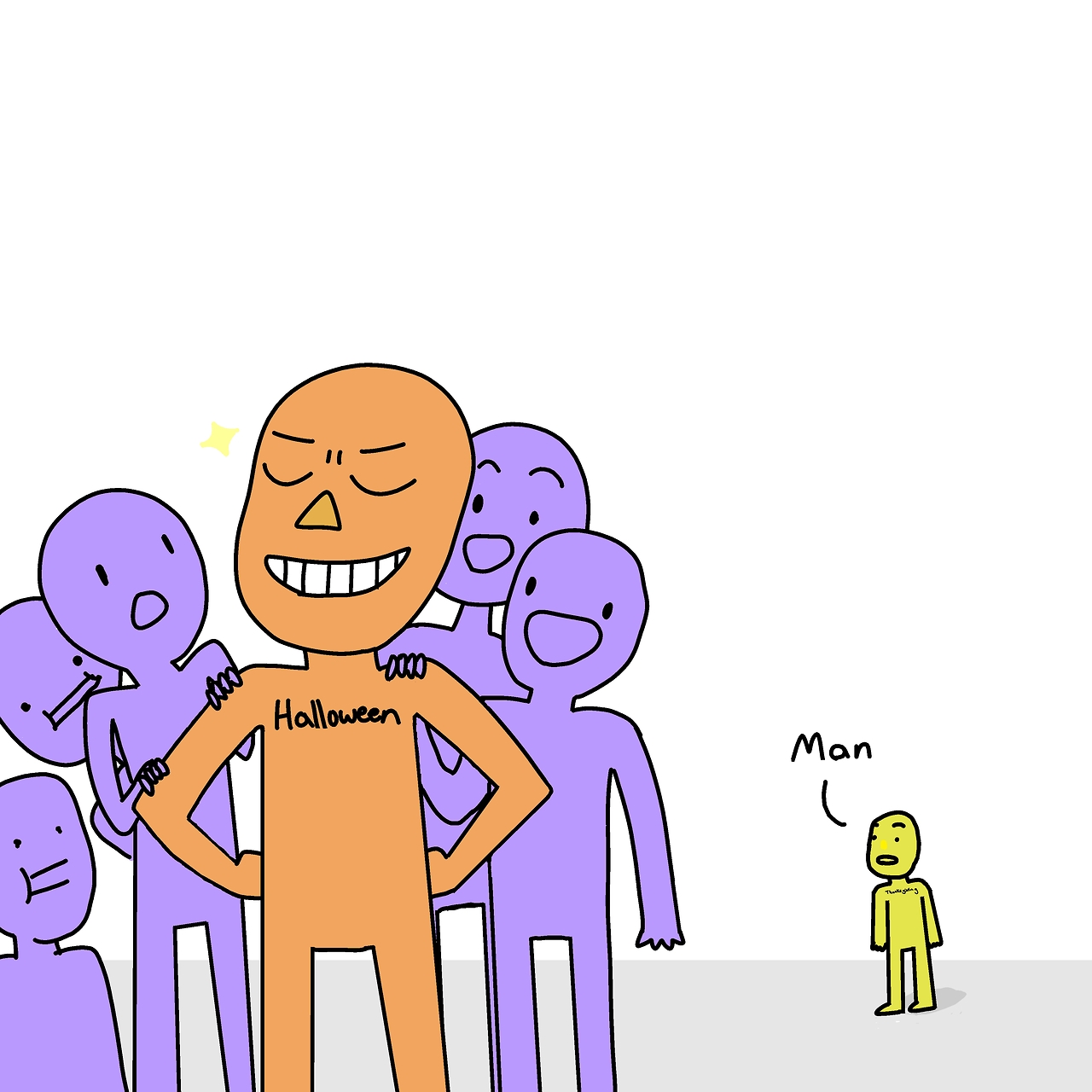
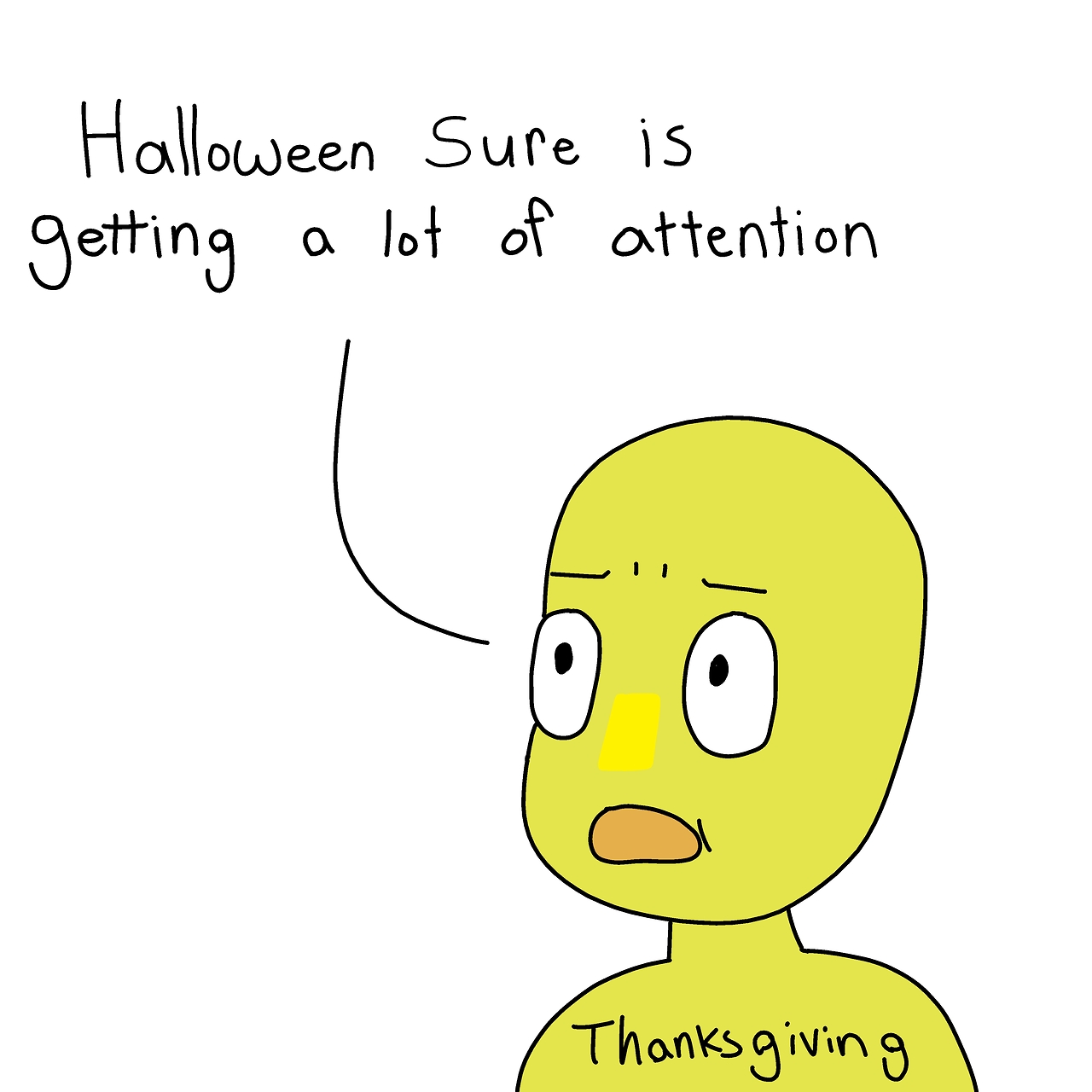
tumblr_ndciaq6Z6j1sfcogqo1_1280 tumblr_ndciaq6Z6j1sfcogqo2_1280 tumblr_ndciaq6Z6j1sfcogqo3_1280tumblr_ndciaq6Z6j1sfcogqo4_1280Thanksgiving, it would seem, is never going to get its just desserts.

As we lapsed into November, each subsequent display of green and red further wore down my resolve. This is it, I said to myself, there’s no help for you now. The holiday season has come. At that point, I gave up the fight, but still, I could not for the life of me muster any semblance of the holiday spirit. Every ringing Salvation Army bell was an assault on my senses, the familiar sounds of carols on the supermarket PA system was a dirge amid the cacophony of early Christmas shoppers. As friends and coworkers began to discuss plans for holiday parties, I felt myself withdraw further, immediately exhausted by the mere suggestion of any such gathering.

However, that the space within my mind was still no refuge. The halls within were likewise decked – not so much dancing with pictures of sugar plums, but lined with lists of holiday shopping to be done, Christmas and Hanukkah cards that would need to be mailed, of phone calls home that would need to be dialed. Will I be able to host a Yuletide ritual this year (we are a multi-faith family, in case you couldn’t tell)? Where is the money coming from to finance our gift-giving this year, sparse though it may be? And there, lingering in the dark was the Ghost of Christmas’ Past, waiting for her due consideration.

My hanai-mom uses the phrase “raised by wolves” to describe my (and hers, and several others whom she knows) traumatic upbringing. If you are also part of this Wolf Tribe, then you already know – shit goes down at Christmas time. It is a long known and veritable fact. The fat man in red comes out to play, and your ears perk up like a hunted animal, the fight or flight instinct activated. Sirens going off. It’s all hands on deck. You are battle ready. Despite the fact that Christmas was, by all rights, a HUGE holiday in our house – huge, like, decorations to rival the North Pole’s greatest and finest – the holiday season was fraught. How could it not be? You take a home already stressed to its limit with individuals suffering from various mental illnesses and addictions, add some crippling debt and social compulsions, cook over the boiling mass of the November-December months, and whattaya get? It’s not good, let me tell you.

Merry Christmas, kids!

Still, I look back on those Christmases and I wish I could bring some of the fervor back. Christ, did my mom have fervor. She did the Christmas thing like it was her job. I actually would have liked to carry on that portion of the family tradition, but have been stymied, in part because all of her decorations were misplaced or destroyed over the years, and in part because, well, bah-hum-bug! I seem to have inherited and, over time, nursed my old man’s Ebenezer Scrooge attitude. Every year, I find myself bah-hum-bugging earlier and more often. It’s ironic, in a way, for how often I railed against my dad’s anti-holiday-cheer campaign when I was little. Looking back I think it was, on his part, very good-natured, though it really bothered me at the time. I loved the holiday season so completely – I loved being on break from school so I could spend time with my parents, I loved the cookie baking, the present wrapping, the tree-trimming – all the best parts that didn’t involve yelling, slamming doors, and sirens.

I suppose that’s why I find each year’s initial encounter with the Ghost of Christmas’ Past so exhausting. Each year I am reminded of what I would like to bring back for my daughter – the good stuff – and what I must strive, every day, to avoid. Perhaps this, too, is why folks with depression and other mood disorders find the holidays especially taxing. Though I have come to learn in the past few years that the oft-quoted statistic of increased suicides during the winter months is inaccurate, it seems to me that (at least anecdotally) the population does tend to struggle a little more during this time.

Self-care is important all year-round, of course, so don’t forget that there are resources available to you if you feel like you’re slipping through the cracks. Perhaps this year would be a good time to discuss openly and candidly that while suicide doesn’t necessarily increase in incidence over the holidays, the Holiday Blues are not to be trifled with — we all struggle, and I suspect that we all have feelings of loss associated with this time of year. If you also find this to be true, please take care; should the clock strike one on a cold winter’s night and you come face to face with the spectre of your own Christmas’ Past, do not fear. Greet her, and let her show you what you may have missed, what you may want to carry back.

Where you rest

November 15th, 2014

Today was your birthday. You would have been 59. I couldn’t bring you a card, or cake, or flowers, so I brought to you your legacy — a little girl with the same turn of jaw and curve of chin. We turned East and drove to that beach where you rest, to those waters that are now your arms, and legs, and laughing mouth, to that sand that is now your hands and feet. I couldn’t see you, I couldn’t feel you, but I prayed to God that you were there.

Moira was a little scared at first, like she is when she meets a stranger. I sat with her at the outer limits of the surf as the waves drifted slowly in and you tickled her toes, wet her hair. You whispered to her quietly, confidentially through the waves. She picked up wet, sloppy handfuls of sand and squeezed them delightfully through her fingers, and I imagined that she was squeezing your hand. She stomped her feet in an oncoming wave, and I pictured her dancing with you. We walked into the water, past the shorebreak, and into the crisp blueness to sing you Happy Birthday, and I imagined your arms around us, holding us. It was the very best I could do.

I opened my hands underneath the waves, closed my eyes, and prayed, much as I have done every time I have visited this place. Let her be here, let her come. Let there be a touch, let me be open, let there be something.

I heard Moira laughing as she played with her daddy in the water. I felt the waves ripple past my skin, warmed and cooled in turn by the sun and the afternoon’s breeze. I waited, but the supernatural evaded me, as it is wont to do.

Closing my hands, I brought them up out of the water, and opened them toward Moira. She smiled in that way that proves she was born for her Hawaiian name — Kealohi, The Light. “Hau`oli Lā Hānau, Meemaw Janis,” I said, sing-song for us both, before turning to go home.

image

The Momma Bear Protocol

Parenthood — motherhood in particular — comes loaded with a lot hidden programming. Sure, there’s a lot they don’t tell you — I did not anticipate, for example, having my moderately sized 36Bs landing in the 40F range by the time it was all over.

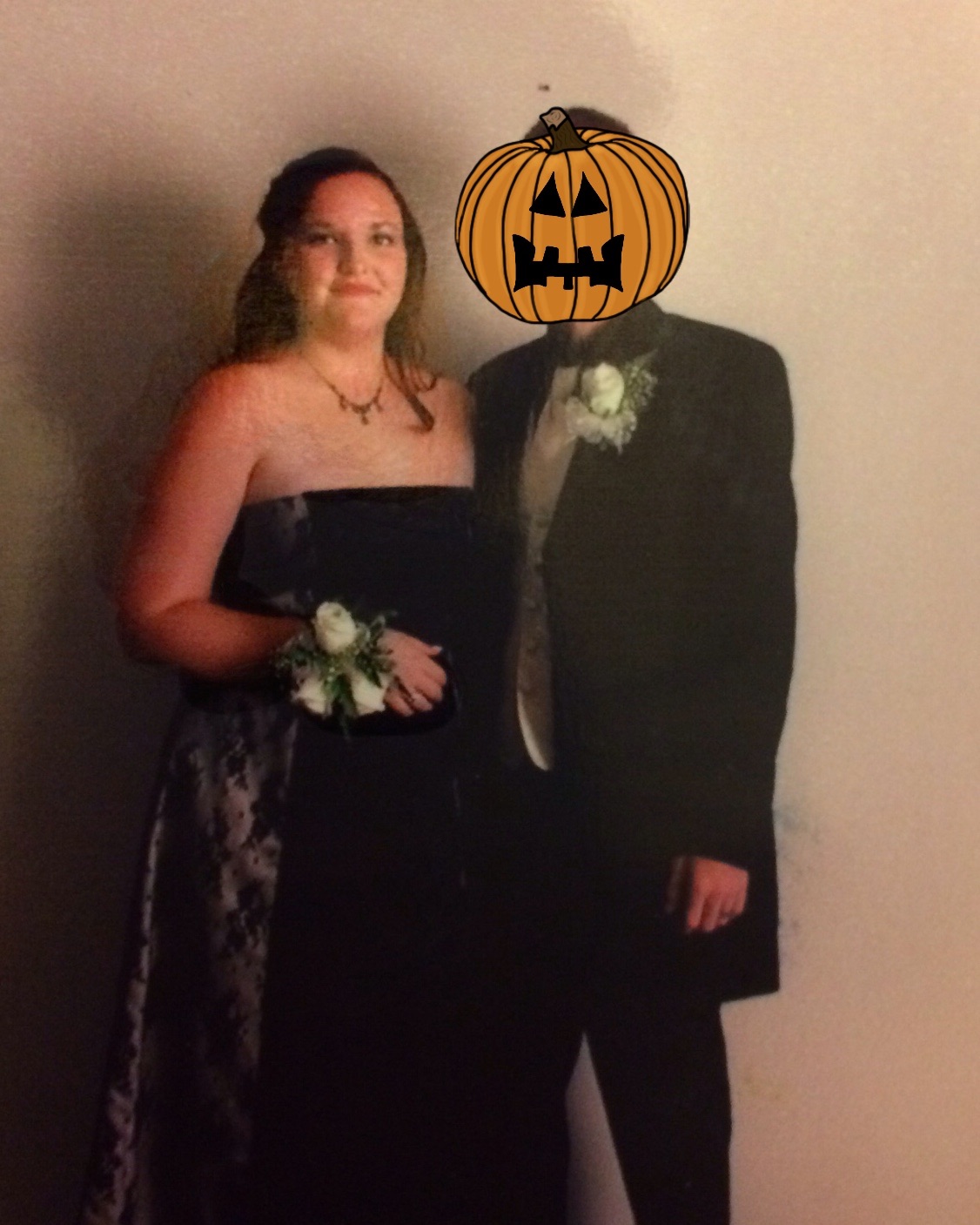
Poor High-School-Boyfriend. He missed out. But at least he's related to the Pumpkin King. Still has that going for him.
Pre special-order bras. Poor High-School-Boyfriend, he really missed out. But at least  he’s still related to the Pumpkin King. He’ll always have that going for him.

Besides boobs more massive than Husband or I could ever have dreamed of, there’s also the ability to diagnose minor ailments by glancing inside a poopy diaper, and the somewhat less desirable ability to hold protracted conversations about what I have found within those diapers.  But there are also things I wouldn’t have believed, things that well up from deep within.

There exists an intrinsic desire to care for every aspect of your child’s well-being, to make sure that they are safe at all costs — it is deep, lizard-brain,  instinctual caveman shit. And if you’re a mom, I speak primarily of the Momma Bear Protocol.

Yeah, I would want to tango with that gal, either.

As a new mother, you may not realize that you have downloaded this critical programming until after you have given birth. Perhaps not even until long after, not until your child stumbles unwittingly into a situation of some minor threat or danger, and you quite suddenly find that the rational, pleasant, complimentary person you once were has suddenly left the room and a wild, raging animal has taken her place. The Momma Bear Protocol has been activated.

God help you, you poor, unfortunate soul.

Perhaps the most surprising this about the Protocol is that there are no caveats or exceptions: it applies to all offspring (it can even apply to children under the care of the Momma Bear but not otherwise related, or children who are in the vicinity of the Momma Bear but not witnessed to be under the care of another Momma Bear) and the Protocol contains no fail-safes or contingencies for the other caretakers of the child or children, nor the inherent integrity of those caretakers — if they fuck up, GOD HAVE MERCY ON THEIR SOULS.

I'm comin' for ya.
I’m comin’ for ya.

Case in point: the night my husband accidentally locked me out of the house while our infant daughter slept upstairs.

He didn’t mean to do it. He works nights and he was running late, so in the rush to get in the house, change clothes, get back outside, and switch cars with me, things got a little hairy. He assumed I had my house keys. I assumed that anyone with a brain would know better than to lock the door with an infant in the house and no adults inside. Clearly, there were some failures in communication somewhere along the way. Be that as it may, none of of that really mattered once I was standing on our porch, listening to my daughter cry upstairs, with no way to get to her.

Momma Bear Activated: I broke the window next to the door, reached in and threw the lock.

Moira was fine, of course. She was already back asleep as soon as I was in the house, but that didn’t mean that I was any less hysterical. I called my husband’s cell phone and, in a voice that was two decibels higher than dog’s can hear, left a message that would have melted his ear off, had he been able to understand me. He called back to apologize, but it wasn’t until he came home the next morning to take in the broken window and my messed up arm that it really sunk in.

The moral of the story: Don’t mess with Momma Bears.

I amend my earlier statment: I wouldn't want to mess with her, unless she messed with my kid. And then I would poleax her, and grind her bones for breakfast.
I amend my earlier statement: I wouldn’t want to mess with her, unless she messed with my kid. And then I would poleax her and grind her bones for breakfast.

I feel sick.

Every time the depression wells back up and takes me, I feel like a failure. This time it took me by surprise in a new way because it didn’t start with sadness, it started with success. Yes, I’ve been tremendously busy, but I’ve been on top of it all – managing my appointments, my schedule, showing up on time, in the places I’m meant to be, and feeling good. I’ve been feeling in control of myself, nigh invincible, as I have taken on more and more, chasing that glorious moment of triumph.

Something you should know about me: As long as I’ve had something that needs improvement, I have had something to prove.

This time, my descent started with an up-tick. It started with the slow, steady ascent of a wooden coaster, as the click, click, click ushers you ever onward and upward toward the peak before it surrenders you unto the nothingness, allowing you to fall.

"STOP THE RIDE, I WANNA GET OFF," she would have said, if she had better foresight.
“STOP THE RIDE, I WANNA GET OFF,” she would have said, if she had had better foresight.

But this time it would seem the problem is not really the depression, but the mania. The mania (and the anxiety and the paranoia), which previously only lasted for a few hours or perhaps a day at the most, has become recurring.

I can’t think. I can’t write. I am distracted by the tiniest of things. Glitter, stuck to my sweat-dampened skin. Moira, exploring my work area. The feel of the air in the room, how oppressively warm it is with the sliding glass door closed and the humidity inching upward each moment as the sun heats the moisture on the pavement outside. The creeping vines of anxiety as each of these press inward on my consciousness, the feeling starting in my ankles, moving inexorably upwards toward my chest, immobilizing me and robbing me of my words, setting a spark to my fight or flight response. It suddenly occurs to me that I can either sit here self-immolating, or I can get up and start pacing, picking, cleaning, starting with a lint-roller all over my body to get rid of that god-damned glitter because FUCK GLITTER. WHO LET THAT SHIT INTO MY HOUSE?!

Satan is a five year old girl with access to fairy dust.

The depression which has punctuated these last few stretches of anxious upheaval has been an almost welcome reprieve. As I have mentioned before, the contrast between the two states is, I imagine, like being catapulted from a tub of hot water into cold, and back and forth — not unlike what Inigo experienced when Fezzik forcibly removed him from his state of drunkenness in the Princess Bride.

drunkinigoBut rather than restore me to sanity, the effect has been completely destabilizing. I feel like I have nothing.

It’s in those awful moments I want to do truly terrible things to myself. Still. Even with all the treatment, the therapy, the medications, everything, all the improvements I’ve made, all the distance I’ve covered in the last few years, when I feel the control begin to slip away from me, the urge to harm myself screams back into focus with alarming alacrity. I just know, with deep, chilling certainty, that one simple act of self-harm would immediately, easily end the uneasy, frenetic scratching in my skull – the pain would calm me, my stomach would settle, and I would finally feel better.

My heart wouldn’t be fluttering any longer, and my thoughts wouldn’t be racing. My mind wouldn’t be festering with words and stories that refuse to coagulate into coherent stories worthy of telling. I could sit and enjoy my family’s company, my daughter’s play, my husband’s touch, or the simple miracle of a quiet house.

I don’t typically feel that my mental illness is particularly disabling, or that it makes me especially ill. In fact, as a colleague and I were discussing the other day, we take particular pains to obscure our mental “peculiarities” as much as possible, lest the rumor mill start a’ pumpin’. But this? I hate this. This makes me feel as though I suffer from true madness. I am provoked, then, to spit out the proverbial poison – to remove it from my person as if by force (thus, The Real Sarah C Project was born). Well, now that I think about it, it actually was by force! These 800 words took me two very painful weeks of writing, bitching to trusted friend about not being able to write, trying and failing to write other things, and then trying again.

Reader, the thing that I really want you to know is that I feel like a terrible mess. And despite feeling like a terrible mess, in these last few weeks, I have still felt very much myself – on top of my game, good at my job, able, and confident. I’m not sure precisely what that means in the long run, but in the spirit of keepin’ it real, I just wanted you to know: you can still keep it together while you’re falling apart.